

♥ Wishlist
Compare 51 verified Hammock Swing Chair Accessories for Canadian Homes and Outdoor Spaces products in Canada. Reviews, ratings, pros, cons and buying advice updated for October 2026.


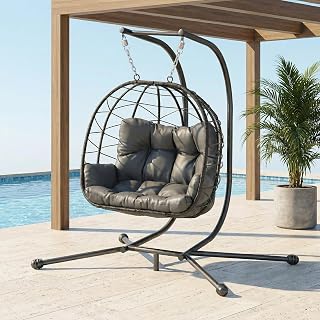


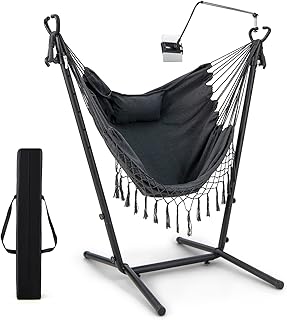


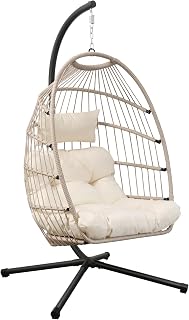


A luxury hammock swing chair can become a standout feature on a Canadian patio, balcony, sunroom, cottage deck, or indoor relaxation area. The best choice is not necessarily the most expensive model. It should match the available space, intended location, user weight requirements, mounting conditions, climate exposure, and preferred level of comfort.
For shoppers comparing swing chairs and related accessories in 2026, the most useful approach is to evaluate the complete setup rather than judging the chair by appearance alone. A beautiful hanging seat still needs a suitable support structure, compatible hardware, appropriate clearance, and materials that can tolerate the environment where it will be used.
The term luxury can describe several different qualities. Some premium-looking swing chairs emphasise upholstery and cushioning, while others focus on woven craftsmanship, a generous seating area, durable frames, ergonomic shaping, or sophisticated outdoor styling.
Weight capacity is one of the most important specifications for a hanging chair. Do not assume that a large seat automatically supports two people or that a heavy-looking frame has a higher rated capacity. Check the manufacturer's published limit for the complete chair and, when relevant, compare it with the rating of the mounting hardware or stand.
For shared use, account for the combined weight of occupants rather than considering each person's weight independently. Accessories such as thick cushions, blankets, or hanging baskets may also contribute a small amount of additional load. A suitable safety margin is preferable to selecting a product that operates close to its stated maximum.
Measure the installation area before ordering. Record the available width, depth, ceiling or overhead height, and the distance from nearby walls, railings, furniture, doors, and other obstacles.
Single-seat hammock chairs are generally easier to accommodate in smaller spaces. Wider models can provide a more lounge-oriented experience but require additional floor or overhead clearance. Double swing chairs may be attractive for couples or family spaces, but shoppers should verify that the published capacity and suspension system are explicitly designed for that use.
Frame material affects appearance, weight, durability, and maintenance. Steel can provide substantial structural strength, while powder-coated finishes may offer useful protection against environmental exposure. Aluminium is often valued where lower weight and corrosion resistance are priorities. Wood can provide a warmer, more traditional appearance, but the specific species, finish, joints, and maintenance requirements matter.
Do not compare materials by name alone. A well-designed product with appropriate joints and finishing can be more suitable for a particular application than a product made from a nominally premium material without adequate protection.
Woven rattan-style designs are popular for contemporary patios and resort-inspired interiors. Natural rattan has a different maintenance profile from synthetic wicker, so buyers should establish which material is actually used. Synthetic wicker can be particularly attractive for outdoor furniture because the material is designed to replicate a woven appearance while providing a different level of weather resistance.
Fabric hammock chairs can deliver a softer, more flexible seating experience. Cotton and cotton-blend constructions may feel comfortable indoors or in protected spaces, while outdoor-oriented fabrics may be engineered for greater resistance to moisture and sunlight. Product descriptions should be checked carefully for washing instructions, fabric composition, and recommended exposure.
Wooden spreader bars and frames can create a classic hammock aesthetic. Buyers should check whether the wood is intended for indoor or outdoor use and whether periodic sealing or other maintenance is recommended. Canadian seasonal conditions can be considerably harsher than those found in sheltered indoor environments.
Chains, hooks, springs, brackets, carabiner-style connectors, and frame components should be assessed separately from the chair itself. Corrosion protection becomes especially relevant for outdoor installations. The specification should identify the intended use and compatibility rather than leaving shoppers to guess whether a particular accessory is suitable.
A hanging chair is only as reliable as its complete suspension arrangement. A high-quality seat cannot compensate for an unsuitable mounting point or incompatible hardware.
Ceiling-mounted installations require an appropriate structural support point. A decorative ceiling surface is not automatically a suitable load-bearing structure. Depending on the building, the correct mounting method may involve a structural beam, joist, masonry substrate, or another appropriately engineered support.
For renters or shoppers who do not want to modify a ceiling, a dedicated freestanding stand can provide a practical alternative. The stand should be rated for the intended chair and load, with a stable footprint appropriate to the swinging motion.
The right accessories can improve comfort and practicality, but compatibility should be confirmed before purchase. Accessories should never be treated as interchangeable merely because they appear visually similar.
Mounting kits may include springs, straps, chains, brackets, hooks, or other connectors. Compare the stated load rating, installation method, material, dimensions, and intended substrate. A kit designed for one type of structural support may not be appropriate for another.
A dedicated stand can be one of the most useful accessories for a swing chair. Look at the stand's maximum supported load, base dimensions, height adjustment, material, finish, portability, and compatibility with the chair's suspension arrangement.
Replacement cushions can extend the useful life of a favourite chair or change its appearance. Measure the seat and back area carefully and compare cushion thickness, attachment method, fabric, filling, and washing instructions.
A fitted furniture cover can help reduce exposure to dirt, precipitation, leaves, and sunlight when the chair is not being used. Choose a cover that fits the chair's actual dimensions and provides suitable ventilation rather than assuming a universal cover will be adequate.
Additional padding can make a woven or fabric chair more comfortable, especially when the chair is used for reading or extended relaxation. Look for secure attachment points so the pad does not shift during normal movement.
Canada's climate makes outdoor furniture selection particularly important. Conditions vary dramatically between coastal regions, the Prairies, Ontario and Quebec, northern communities, and milder parts of British Columbia. Even within the same region, a covered balcony and an exposed garden have very different environmental demands.
Continuous ultraviolet exposure can affect fabrics, coatings, synthetic materials, and finishes. If the chair will remain outdoors for long periods, check whether the manufacturer specifies outdoor suitability and any UV-related care recommendations.
Outdoor suitability does not necessarily mean that every component is designed to remain wet continuously. Cushions can retain moisture, while enclosed seams and metal fittings can require additional care. If possible, protect the chair from prolonged precipitation and allow wet materials to dry thoroughly.
In much of Canada, seasonal storage is an important consideration. Before buying a large swing chair, determine whether the frame can be disassembled and whether the cushions can be removed. A compact storage design can be more useful than a larger chair that has nowhere suitable to go during winter.
For bedrooms, reading corners, conservatories, and living spaces, appearance and comfort may take priority over weather resistance. Fabric texture, cushion depth, suspension height, floor clearance, and interior styling become central considerations.
For decks, patios, porches, and balconies, weather suitability should be considered alongside comfort. Look for appropriate outdoor materials, removable cushions, corrosion-resistant hardware, and practical cleaning requirements.
Brand familiarity can help shoppers establish a starting point, but the individual product specification remains more important than the logo. Depending on the style and category, consumers may encounter names such as IKEA, Outsunny, SONGMICS, Christopher Knight Home, Best Choice Products, Sunnydaze Decor, and Yaheetech when researching hanging chairs and outdoor furniture.
Brand availability, model ranges, specifications, retailer listings, and Canadian pricing can change. Treat brand names as comparison points rather than assuming that every product from a particular manufacturer has the same construction or quality level.
A useful comparison should go beyond star ratings. Customer feedback can identify recurring practical issues, while technical specifications establish whether the chair actually suits a particular installation.
Product photography can make a hanging chair look substantially larger or more substantial than it is. Always check dimensions, materials, capacity, and included components before comparing designs.
The most attractive chair is not useful if there is no suitable place to install it. Identify the structural support and available clearance first.
Outdoor furniture still needs care. Rain, snow, freezing temperatures, UV exposure, and repeated wet-dry cycles can affect different materials in different ways.
Some chairs are supplied as seating units without a freestanding frame. Compare the complete configuration you need rather than assuming the photographed setup represents the contents of the package.
A replacement cushion, spring, hook, chain, or stand should match the chair's dimensions and load requirements. Verify compatibility with the relevant model before purchasing.
Large furniture can arrive in substantial packaging. Before ordering, consider doorway widths, staircases, elevators, storage areas, and the location where the package will be assembled.
Customer reviews are most useful when they provide specific information about construction, comfort, assembly, dimensions, and long-term use. A review that simply says a product “looks great” provides less buying information than one describing the seat dimensions, assembly process, fabric behaviour, or stability of the stand.
Look for recurring themes across multiple reviews rather than allowing a single unusually positive or negative comment to determine the decision. Pay particular attention to feedback from customers using the product in conditions similar to yours.
The lowest initial price is not always the lowest-cost option over the useful life of a chair. Consider the price of required accessories, replacement cushions, protective covers, mounting hardware, and potential seasonal storage.
A product with a durable frame but inexpensive replaceable cushions may be easier to maintain than a chair where every component must be replaced as a single unit. Conversely, paying more for unnecessary decorative features may not provide meaningful value if the chair will receive only occasional use.
Follow the manufacturer's care instructions for each material. Dust and surface debris can usually be addressed before they become embedded, while removable textiles may have specific washing restrictions.
Periodically inspect ropes, straps, chains, springs, hooks, connectors, and mounting hardware for visible wear, corrosion, deformation, fraying, or other damage. Do not continue using a suspension component that appears compromised.
Look for loose fasteners, damaged welds, cracks, movement at joints, rust, or deterioration of protective coatings. Tightening hardware should follow the manufacturer's instructions rather than relying on excessive force.
Store cushions in a dry, protected location when practical, especially during periods of prolonged rain or winter weather. Allow damp cushions to dry thoroughly to help minimise moisture-related problems.
For exposed outdoor installations, winter storage can be an important part of ownership. Clean and dry components before storing them, keep textiles away from prolonged moisture, and follow the manufacturer's storage recommendations for the frame and hardware.
Suspended furniture should be treated as a load-bearing installation rather than ordinary decorative furniture. The mounting point, fasteners, suspension components, stand, chair frame, and seat all contribute to the overall safety of the setup.
Before making a final decision, use a simple specification-first checklist. Confirm the dimensions and capacity, establish the installation method, identify every included component, assess the material suitability for Canada's climate, and calculate the cost of any necessary accessories.
Then compare customer feedback and current retailer information. Specifications and availability can change during 2026, so verify the details for the exact model and configuration you intend to purchase rather than relying on an older listing or a photograph of a different version.
There is no single best model for every Canadian shopper. The right option depends on installation location, available space, weight capacity, comfort preferences, weather exposure, material selection, and budget. Compare the complete specifications of shortlisted models rather than choosing solely from appearance or review scores.
Some are designed for outdoor use, while others are better suited to sheltered areas or interiors. Check the manufacturer's intended-use information, material specifications, care instructions, and weather-exposure guidance before leaving a chair outdoors.
It depends on the model. Some configurations include a stand, while others are designed to be suspended from an appropriate structural support. Always check the package contents for the exact product listing.
Yes, models intended for indoor use can work well in bedrooms, living rooms, reading corners, and other suitable spaces. The critical consideration is whether the selected mounting point and hardware are appropriate for the load.
The required space varies according to the chair's dimensions and movement. Measure the full footprint and leave clearance around the chair so it can move without striking walls, furniture, railings, or other obstacles.
Useful accessories can include compatible mounting hardware, a suitable stand, replacement cushions, protective covers, and appropriate suspension components. The best choices depend on whether the chair is installed indoors, on a covered porch, or in an exposed outdoor location.
Follow the manufacturer's storage instructions. In general, removable cushions and textile components should be cleaned and thoroughly dried before protected storage, while outdoor frames and hardware should be checked for moisture, corrosion, and damage before the chair is put away.
No. Higher pricing can reflect materials, design, construction, cushioning, brand positioning, or additional components, but shoppers should still compare objective specifications. Weight capacity, dimensions, material suitability, suspension design, maintenance requirements, and included accessories are more useful comparison criteria than price alone.
The strongest luxury hammock swing chair choice is the one that fits the intended Canadian environment, provides the required comfort and capacity, and can be installed and maintained correctly. Start with structural suitability and dimensions, then compare materials, suspension components, cushions, weather resistance, storage requirements, and customer feedback.
For an independent buying decision, compare several current models side by side, read verified customer reviews, examine the complete specifications, and check today's retailer information before purchasing. The exact configuration, accessories, availability, and pricing can change, so verify the details for the specific model you are considering in August 2026.