

♥ Wishlist
Compare 54 verified Gliders for Comfortable, Relaxing Seating products in Canada. Reviews, ratings, pros, cons and buying advice updated for October 2026.


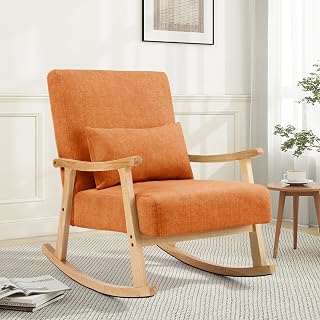


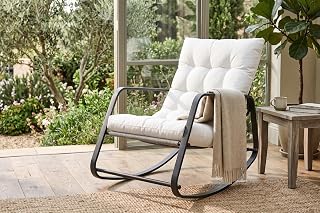


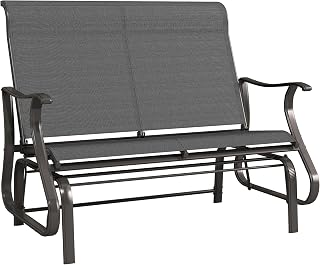


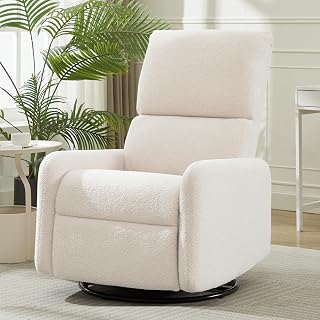


A luxury glider is more than an accent chair. It is a long-term seating purchase where smooth movement, ergonomic support, upholstery quality, frame construction, cleaning practicality and room dimensions all matter. For Canadian shoppers, the right choice also depends on the space available, the intended use, seasonal comfort, household lifestyle and whether replacement parts or after-sales support are important.
When comparing luxury gliders for 2026, look beyond photographs and headline features. Two chairs can have a similarly sophisticated appearance while differing substantially in seat depth, reclining mechanism, weight capacity, cushion construction, fabric performance and overall comfort. A useful comparison starts by identifying how the chair will actually be used and then matching those requirements against measurable specifications.
The strongest buying decision is usually not the chair with the longest feature list. It is the model whose construction and dimensions fit the user's needs most closely. Before comparing individual luxury gliders, establish a short list of requirements covering comfort, movement, upholstery, size, maintenance and budget.
Consider whether the glider will primarily be used for reading, relaxing, feeding and soothing a baby, watching television, occasional guest seating or everyday lounging. Frequent use places greater importance on durable upholstery, supportive cushioning, reliable motion and a robust frame.
Luxury furniture can look deceptively compact in product photography. Measure the available floor area rather than relying only on the listed overall dimensions. Record the chair's width, depth and height, then allow additional clearance for doors, drawers, tables and walking routes.
If the model reclines, swivels or has an extended footrest, measure the operating footprint as well as the closed footprint. A chair that fits neatly against a wall when upright may require considerably more space when fully reclined.
Also check the route into the intended room. Measure doorways, stairwells, elevators, hallways and tight corners. Compare those measurements with the packaged and assembled dimensions supplied by the manufacturer or retailer.
The frame provides the structural foundation of a glider. Hardwood, engineered wood and mixed-material constructions can all be used effectively when properly designed and assembled, so the material name alone should not determine the purchase.
Look for clear information about the frame, joints and structural components. A well-specified chair should provide enough construction information for a shopper to understand what supports the seat and how the moving components interact with the stationary frame.
Pay attention to whether the product description discusses reinforced joints, corner blocks, metal supports or other structural elements. A premium appearance does not automatically indicate premium construction. Inspect photographs carefully for exposed hardware, uneven seams and components that appear poorly aligned.
When customer reviews are available, separate comments about cosmetic preferences from recurring reports concerning looseness, noise, wobbling or mechanical problems. A single complaint does not establish a product-wide defect, but repeated comments describing the same issue deserve investigation.
The defining feature of a glider is its controlled movement. Depending on the design, the chair may use metal bearings, enclosed hardware, springs or another mechanical arrangement. The important buying question is how smoothly and quietly the mechanism operates and whether it feels stable throughout its travel.
These terms are sometimes used interchangeably in furniture listings, but they describe different experiences. A traditional rocker pivots through an arched base. A glider generally moves through a smoother, more controlled path using a mechanical base. A swivel glider adds rotational movement, while a glider recliner combines movement with a reclining mechanism.
A traditional glider is suitable when the primary objective is gentle, repetitive movement. Its relatively simple function can make it appealing for nursery or reading-room applications where reclining is unnecessary.
A swivel glider adds rotational flexibility. This can be useful in rooms where the chair needs to face different directions, although the additional mechanism can affect the chair's footprint, weight and maintenance requirements.
A glider recliner is often the most versatile configuration. It can provide an upright position for conversation and a reclined position for extended relaxation. However, the mechanism introduces more moving parts, so shoppers should examine construction details and warranty terms carefully.
Performance-oriented upholstery can be attractive for households expecting frequent use. Look for specific information about stain resistance, abrasion performance, cleaning instructions and fibre composition rather than assuming that the word "performance" guarantees a particular level of durability.
Polyester is widely used in upholstered furniture because it can provide a practical balance between appearance, durability and maintenance. The actual performance depends on the weave, fabric treatment, construction and overall quality of the upholstery.
Microfiber can provide a soft hand feel and relatively straightforward routine cleaning. It may be worth considering for family rooms and other high-use areas, but always follow the manufacturer's specific care instructions.
Velvet delivers a distinctly luxurious appearance and can make a glider a visual focal point. It also shows directional shading and pressure marks more readily than some textured fabrics. If appearance consistency is important, inspect product photographs from several angles and understand the recommended cleaning method.
Leather can create a refined appearance and is often associated with premium seating. Faux leather can offer a different combination of appearance, cost and maintenance. Canadian shoppers should compare the precise material description instead of treating all leather-like upholstery as equivalent.
Seat depth affects posture substantially. A deep seat can feel spacious to taller users but may leave shorter users without adequate back support. A shallow seat can provide a more upright posture but may feel restrictive to taller adults.
Compare the listed seat depth with your own sitting position. If possible, compare the measurement against a chair you already find comfortable.
Seat height influences how easily you can sit down and stand up. A very low chair can feel comfortable for lounging but may be inconvenient for someone with limited mobility. A higher seat can make standing easier but may change the feel of the chair when relaxing.
Look for adequate upper-back and lumbar support, particularly if the glider will be occupied for long periods. High backs can provide additional support, while segmented cushions may offer a more structured feel. Cushion firmness is highly subjective, so product descriptions and customer feedback should be considered together.
Wide, padded armrests can be particularly valuable in a nursery or relaxation chair because they provide a stable place to rest the arms. Check the armrest height relative to your normal sitting position and consider whether the padding is integrated into the frame or supplied as a separate cushion.
Foam density, fibre fill, spring systems and layered cushion construction can all affect how a chair feels over time. A premium price does not automatically indicate a specific cushion composition. Look for transparent specifications whenever possible.
Do not judge capacity from visual size alone. Check the manufacturer's stated maximum weight capacity and compare it with the combined weight of the people who may regularly use the chair.
Families should also consider how the chair will be used several years from now. A nursery chair may initially be used by one adult and an infant but later become a general-purpose family chair. Selecting a construction and capacity appropriate for long-term use can make more sense than choosing solely for the baby's first year.
If a luxury glider is intended for a nursery, safety should take priority over decorative features. Check for stable construction, smooth mechanical operation and appropriate clearances around moving parts. Keep cords from powered recliners away from children and follow the manufacturer's installation and operating instructions.
A glider should not be treated as a substitute for an approved infant sleep environment. Babies should be placed in an appropriate sleep space according to current Canadian safe-sleep guidance. The chair is primarily adult seating and should be evaluated accordingly.
Brand recognition can help narrow a search, but it should not replace product-level evaluation. Established furniture brands such as La-Z-Boy, Dutailier and Palliser offer useful reference points when comparing construction approaches, upholstery choices and seating configurations. Nursery-focused brands such as Babyletto and Storkcraft may also appear in searches for glider-style seating.
The correct comparison is between individual models, not simply between brand names. Check the exact frame construction, dimensions, upholstery, mechanism, capacity, assembly requirements and applicable warranty information for each model.
La-Z-Boy is particularly relevant when comparing reclining furniture and comfort-oriented seating. When evaluating one of its glider or recliner configurations, focus on the exact mechanism, upholstery selection, dimensions and available functions rather than assuming every model has the same construction.
Dutailier is a recognizable name in nursery and glider furniture. Its products can be useful reference points for shoppers specifically interested in traditional gliding motion, nursery seating and long-term comfort. Compare the specifications of the individual model under consideration.
Palliser is a Canadian furniture brand worth considering when researching upholstered seating and recliner configurations. Compare individual products for dimensions, upholstery, motion, construction and the specific features that matter to your room.
Babyletto and Storkcraft are useful brands to investigate when the purchase is connected to nursery furniture. Their glider-style seating should still be assessed using the same criteria: dimensions, comfort, movement, upholstery, cleaning requirements, capacity and long-term practicality.
Customer reviews are useful evidence, but they should be interpreted systematically. A high average rating can hide important differences in how people use the product, while a small number of negative reviews may identify an issue that matters to a particular buyer.
A beautifully upholstered chair can still be uncomfortable if the seat depth, back angle or arm height does not suit you. Treat visual style as one part of the decision rather than the deciding factor.
One of the most common space-planning mistakes is measuring only the upright chair. Reclining models require sufficient clearance for the footrest and backrest.
Price can reflect materials, design, features and brand positioning, but it is not a direct durability rating. Examine construction information and applicable specifications instead.
A delicate upholstery choice may be appropriate in a formal sitting room but less practical for a busy family space. Consider spills, pets, children, sunlight and cleaning frequency before selecting a finish.
A chair can have suitable room dimensions and still be difficult to bring into the house. Check packaged dimensions and assembly requirements whenever that information is available.
Warranty coverage can differ between the frame, upholstery, mechanism and electrical components. Read the actual terms rather than relying on a general statement that a product has a warranty.
Before choosing among the best luxury gliders in Canada, create a simple comparison sheet. This reduces the chance that attractive photography or promotional language will overshadow practical differences.
Wood can provide a warm visual character and strong structural foundation. The important factors include the type of wood or engineered material, thickness, joinery and overall frame design.
Metal components are common in moving furniture mechanisms. Examine how the mechanism is enclosed, supported and designed to operate. A mechanism that feels smooth when new should still be maintained according to the manufacturer's instructions.
Foam can provide structured support, while fibre fills can create a softer, more relaxed feel. Some premium chairs combine several materials to balance resilience and comfort. Ask whether the cushion is reversible, removable or replaceable when longevity is a major consideration.
Regular care can help preserve upholstery and keep moving components operating as intended. The correct maintenance routine depends on the exact materials and mechanism, so the manufacturer's care instructions should always take precedence.
Upholstery appearance depends heavily on routine care. Direct sunlight can affect some fabrics and finishes, while dust and body oils can gradually alter the appearance of frequently used seating. Position the chair thoughtfully, use suitable cleaning methods and avoid placing objects with sharp edges against the upholstery.
For light-coloured fabrics, consider the household's actual risk of spills before buying. For darker fabrics, inspect the texture and finish under the lighting conditions of the room because colour perception can vary considerably between a showroom photograph and a real interior.
Neutral upholstery in shades such as beige, cream, grey, taupe or soft brown can integrate easily with changing décor. A statement colour can make the glider a focal point and may work particularly well in a deliberately designed nursery or reading area.
When buying online, compare the colour against the room's existing flooring, wall colour, curtains and other furniture. Screens can display colours differently, so use manufacturer-provided descriptions and swatches where available.
For smaller rooms, prioritize compact depth and useful functionality. A swivel glider can sometimes provide more practical orientation flexibility without requiring the chair to be physically repositioned. A reclining model may be less suitable where there is insufficient clearance behind or in front of the chair.
Measure the complete circulation path around the chair. Leaving adequate space for walking and opening nearby furniture is more important than squeezing a large statement chair into a small footprint.
Larger rooms provide more flexibility, but oversized furniture can still disrupt proportion. Consider the scale of nearby sofas, coffee tables and storage pieces. A large glider can work as a complementary lounge chair, while a smaller swivel model may be better suited to creating an additional conversational seat.
Nursery seating benefits from a combination of comfort and practicality. Adults may spend long periods in the chair, so seat support and arm positioning are especially important. Easy-clean upholstery can be valuable, while a smooth and predictable gliding motion may be preferable to complicated controls.
Think beyond the nursery's first year. A neutral, well-constructed chair can transition into a bedroom, reading corner or family room if its proportions and style are sufficiently versatile.
For reading, pay close attention to posture. The ideal chair should allow your back to remain supported while your arms can comfortably reach a book or device. If you frequently read for extended periods, a headrest or taller back may be more valuable than decorative detailing.
For general relaxation, reclining capability can increase versatility. However, consider whether the additional mechanism is worth the extra complexity if you normally prefer an upright seating position.
Manual mechanisms can be appealing because they do not require an electrical connection. They can also suit rooms where cord placement would be inconvenient. Evaluate the operating force and whether the mechanism provides the seating positions you actually need.
Power reclining can offer convenient positioning, particularly for users who prefer precise adjustment. The trade-offs include electrical dependence, cord management and additional components. If selecting a powered model, verify the power requirements and understand what the applicable warranty covers.
The best value is not necessarily the lowest purchase price. Consider how frequently the chair will be used, how long you expect to keep it, whether the upholstery suits your household and whether the mechanism provides meaningful benefits.
A simpler chair with excellent construction can represent better long-term value than a feature-heavy model whose additional functions are rarely used. Conversely, a household that spends hours in the chair every day may reasonably benefit from investing in better ergonomics and more durable materials.
Product specifications should be compared using the same units and definitions. Canadian shoppers will commonly encounter measurements in inches and weights in pounds, but listings can vary in the way they describe seat dimensions and overall dimensions.
Do not compare overall depth between two models as though it were seat depth. Similarly, a wide chair does not necessarily have a wide usable seat because armrest thickness can reduce the internal seating area.
Visual luxury usually comes from a combination of proportion, upholstery quality, stitching, cushioning, hardware integration and design restraint. Clean lines, well-fitted upholstery and balanced proportions can create a more sophisticated appearance than excessive decorative details.
Inspect close-up product images for seam alignment, piping, stitching consistency and the way upholstery meets the arms and base. These details can reveal more about visual finishing quality than a broad marketing description.
For an effective 2026 comparison, first eliminate models that do not fit the room. Next remove options whose dimensions or capacity do not suit the intended users. Then compare upholstery, comfort, movement, construction and maintenance requirements. Only after these practical factors have been assessed should decorative features and brand preferences become decisive.
Because product specifications, colour selections, retailer listings and availability can change during the year, confirm the current model details before purchasing. Compare the exact model number wherever possible rather than relying on a product family name.
When comparing current prices, make sure the products being compared are genuinely equivalent. A chair with a power recliner, swivel function and upgraded upholstery should not be compared directly with a basic manual glider simply because both are described as luxury seating.
A luxury glider can be a strong choice for shoppers who value gentle movement, extended sitting comfort and a refined appearance. It is particularly useful when one chair needs to serve multiple purposes, such as nursery seating that later becomes a reading or relaxation chair.
A stationary accent chair may be preferable if movement is unnecessary. A conventional recliner can make more sense when reclining is the primary requirement. A sofa or sectional may be more practical for households that need several seats rather than one premium lounge chair.
The goal is not to select the chair with the greatest number of features. It is to select the configuration that solves the actual seating requirement without introducing unnecessary cost or complexity.
There is no single best luxury glider for every Canadian household. The strongest choice depends on room size, preferred seating position, upholstery requirements, budget, desired movement and whether reclining or swivelling is needed. Compare the exact specifications and current customer feedback for the models on your shortlist.
They can be worthwhile when the chair will receive frequent use and the additional investment provides meaningful improvements in comfort, construction, upholstery or functionality. A higher price should be evaluated against measurable specifications rather than assumed to guarantee better quality.
Prioritize comfortable arm support, appropriate seat dimensions, smooth movement, stable construction, practical upholstery and easy maintenance. If the chair reclines, allow sufficient clearance and consider the complexity of the mechanism.
Neither configuration is universally better. A swivel glider is useful when you want to change direction easily, while a conventional glider may be preferable when simple front-to-back movement is all you need.
There is no universal best fabric. Performance fabric, polyester blends, microfiber, leather and other materials each offer different combinations of appearance, texture, durability and maintenance requirements. Choose according to the household's actual use conditions and the manufacturer's care instructions.
The required space depends on the specific mechanism and model. Use the manufacturer's dimensions for both the upright and fully extended positions, and allow practical clearance for walking around the chair.
Some compact models can work well in smaller rooms, but reclining clearance is critical. Measure the complete operating footprint rather than relying on the chair's closed dimensions.
Compare door, hallway, stairway and elevator measurements with the packaged dimensions supplied by the manufacturer or retailer. If the chair requires assembly, confirm which components arrive separately and what the assembled dimensions will be.
Choose manual operation if simplicity and freedom from electrical cords are priorities. Choose power operation if precise, convenient reclining is more important and you have a suitable electrical connection. Compare the mechanism, power requirements and warranty terms for the exact model.
Routine dust and debris removal can be performed according to the upholstery manufacturer's recommendations. Deeper cleaning should follow the fabric-specific care instructions. Avoid using generic cleaning chemicals unless the manufacturer confirms they are suitable.
There is no single specification that matters most for everyone. For fit, seat dimensions and overall footprint are fundamental. For durability, frame and mechanism information matter. For family use, upholstery and cleaning requirements can be especially important.
Use ratings as one input rather than the sole decision factor. Read reviews for recurring comments about comfort, dimensions, upholstery, noise, mechanical operation and long-term use, and compare those comments with the manufacturer's specifications.
The most useful comparison combines objective specifications with practical ownership considerations. Product photography can establish style, while dimensions establish fit, material specifications establish what the chair is made from, mechanism information explains how it functions and customer feedback provides additional context about real-world expectations.
Before making a final purchase decision, verify the latest product specifications, retailer information, warranty terms, return conditions and current pricing. Furniture models and configurations can change, so information should always be checked against the exact product currently being considered.