

♥ Wishlist
Compare 17 verified Mattresses & Box Springs for Comfortable Canadian Homes products in Canada. Reviews, ratings, pros, cons and buying advice updated for October 2026.


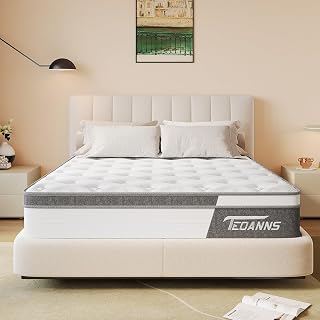


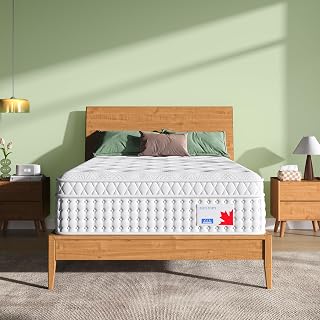


Choosing a luxury mattress and box spring combination involves more than selecting the softest or most expensive option. The right setup needs to match your sleeping position, body weight, preferred firmness, temperature needs, bedroom dimensions, bed frame, and expectations for long-term comfort. In Canada, shoppers should also consider delivery conditions, seasonal temperature changes, retailer policies, warranty terms, and whether the mattress and foundation are actually compatible.
This independent buying guide is designed to help Canadian shoppers compare luxury mattresses, box springs, foundations, and complete sleep systems using practical criteria rather than relying on price alone. Product specifications, customer feedback, dimensions, materials, foundation requirements, and current retailer terms should always be checked before purchasing because these details can change during 2026.
The term “luxury mattress” does not describe one specific construction. It is commonly used for mattresses that emphasize premium materials, sophisticated support systems, thicker comfort layers, refined finishing, or a more substantial overall design. A luxury mattress may be made from memory foam, latex, pocketed coils, hybrid materials, or a combination of several technologies.
A higher price does not automatically mean a mattress is better for every sleeper. A premium mattress that is too soft for a stomach sleeper, too firm for a side sleeper, or incompatible with the intended foundation can be a worse choice than a less expensive model with better-matched specifications.
One of the most important purchasing decisions is understanding what type of foundation a particular mattress requires. The phrase “box spring” is often used broadly, but modern mattresses may be designed for a solid foundation, slatted platform, fabric-covered foundation, adjustable base, or a traditional spring-supported box spring.
A genuine traditional box spring typically contains a spring-based internal structure. A modern foundation may instead use a rigid frame with closely spaced supports. These products can look similar from the outside while providing different support characteristics.
Before purchasing a foundation, check the mattress manufacturer's specifications for minimum slat spacing, permitted foundation types, centre support requirements, weight limitations, and compatibility with adjustable bases. Using an unsuitable foundation can affect support and may have implications for warranty eligibility depending on the manufacturer's terms.
A traditional box spring can be appropriate when a mattress specifically supports that type of foundation and the sleeper wants a more conventional bed setup. It can also provide additional bed height, which may be useful for people who prefer easier access when getting into or out of bed.
Many modern foam and hybrid mattresses are designed to sit on a rigid, supportive foundation or platform. These bases provide an even surface while maintaining adequate ventilation around the underside of the mattress.
A platform bed may eliminate the need for a separate box spring, but compatibility should never be assumed. Slat spacing is particularly important. If the spaces between slats are too wide, the mattress may not receive the continuous support required by its design.
Memory foam is known for its contouring properties and ability to distribute pressure across a broader area. It can be attractive to sleepers who prefer a body-hugging sensation and reduced movement transfer.
The important specifications include foam density, thickness, layer arrangement, and the characteristics of the support core. A mattress containing memory foam can feel dramatically different depending on how much foam is used and what lies underneath it.
Latex mattresses generally provide a more buoyant sensation than conventional memory foam. They can allow easier repositioning while still offering pressure relief. Natural, synthetic, and blended latex should not be treated as interchangeable, so shoppers should examine the manufacturer's material description carefully.
Innerspring construction relies primarily on metal coils for support. Coil configuration, gauge, count, zoning, upholstery layers, and perimeter reinforcement all affect the final feel.
For a premium innerspring mattress, look beyond the marketing term “luxury coils.” Determine whether the mattress uses pocketed coils, interconnected coils, reinforced edges, or zoned support and identify how those components are combined with the comfort layers.
Hybrid mattresses combine a coil support system with substantial foam or latex comfort layers. This construction can provide a balance between the contouring characteristics of foam and the responsiveness and airflow associated with a coil core.
Not every hybrid feels the same. A thick layer of soft foam over supportive coils may feel substantially different from a relatively thin comfort layer over a firmer coil system. Compare the complete layer construction instead of using the word “hybrid” as a quality indicator.
Firmness is highly subjective, but sleeping position provides a useful starting point. The goal is generally to keep the body adequately supported while allowing enough cushioning for pressure-sensitive areas.
Side sleepers often benefit from enough surface cushioning to accommodate the shoulders and hips. A mattress that is excessively firm may create pressure at these points, while one that is excessively soft may allow the torso to sink too deeply.
Back sleepers commonly need a balance between lumbar support and surface comfort. The ideal firmness depends on body proportions, weight, sleeping habits, and personal preference rather than on a single universal firmness rating.
Stomach sleepers often need stronger resistance to excessive sinking around the midsection. A supportive surface can help prevent the body from settling too deeply into the mattress.
If you regularly switch between side, back, and stomach sleeping, a highly specialized mattress may not be as versatile as a balanced medium or medium-firm design. Responsiveness is also important because it affects how easily you can change positions.
Mattress thickness should be evaluated in relation to construction rather than treated as a simple quality measurement. A very thick mattress can contain substantial comfort materials, but additional height does not automatically improve support or durability.
Pay attention to how the total height is distributed between the cover, comfort layers, transition layer, and support core. Two mattresses with the same overall height can have very different internal structures.
Also calculate the combined height of the mattress and foundation. A tall luxury mattress placed on a tall foundation can create a sleeping surface that is inconveniently high for some bedrooms and difficult to pair with existing nightstands.
Canadian shoppers should verify the exact dimensions of every component rather than relying solely on names such as Queen or King. Mattress and foundation dimensions can vary slightly by manufacturer and product line.
Measure the usable floor area rather than simply checking whether a mattress technically fits inside the room. Account for doors, closets, drawers, radiators, windows, bedside tables, and walking space.
It is also worth measuring stairways, hallways, elevators, and bedroom door openings if a conventional full-size mattress and foundation will be delivered to an upper floor. A mattress can fit inside the bedroom while its foundation or rigid base cannot navigate the route to the room.
Motion transfer can be particularly important when two people share a bed and have different sleep schedules. Foam-heavy designs often provide substantial motion isolation, while spring systems can have a more noticeable response depending on coil construction and comfort layers.
For couples, compare motion isolation alongside edge support. A mattress that minimizes movement but has weak perimeter support may still feel less spacious because sleepers cannot comfortably use the full surface.
Edge support is frequently overlooked when shoppers focus on the centre of the mattress. Strong perimeter reinforcement can make the mattress feel more stable when sitting down, getting up, or sleeping close to the edge.
This can matter especially for couples who want to maximize the available sleeping area. Examine whether the manufacturer identifies reinforced edges and whether the support structure extends consistently across the perimeter.
A mattress's temperature performance depends on much more than its cover. Foam density, layer thickness, coil airflow, latex construction, bedding materials, bedroom temperature, humidity, sleepwear, and individual physiology can all influence the experience.
People who tend to sleep warm may want to compare breathable coil systems, ventilated materials, thinner comfort layers, and mattress covers designed for airflow. However, terms such as “cooling” should be interpreted carefully and evaluated against the underlying construction.
Durability cannot be predicted reliably from retail price alone. A more useful approach is to examine construction quality, material specifications, expected usage, support requirements, and the manufacturer's published warranty terms.
Brand recognition can help narrow a large selection, but a familiar name should not replace specification-level comparison. Depending on the retailer and product category, Canadian shoppers may encounter brands such as Sealy, Serta, Beautyrest, Simmons, Tempur-Pedic, Casper, Endy, Silk & Snow, Kingsdown, Stearns & Foster, and Sleep Country house-brand offerings.
Availability, product names, configurations, warranties, delivery options, and current pricing can vary by retailer and over time. Always compare the exact model rather than assuming that all mattresses from a particular brand share the same construction.
When evaluating a shortlist, use a consistent comparison framework. This makes it easier to distinguish genuinely different products from mattresses that use similar marketing language.
Customer reviews are most useful when they are treated as a collection of observations rather than a simple average rating. A mattress can receive excellent overall feedback while still being unsuitable for a particular sleeper.
Look for repeated comments about firmness, heat, edge support, motion transfer, odour after unpacking, ease of setup, and long-term comfort. Pay particular attention to reviews from people with similar sleeping positions and preferences.
Also distinguish product-specific feedback from retailer-related complaints. Delivery damage, scheduling problems, packaging issues, or customer-service experiences may be relevant to the purchase decision but do not necessarily indicate a problem with the mattress itself.
Verified-purchase indicators can provide useful context, but they do not guarantee that an individual review represents every sleeper's experience. Mattress comfort is inherently personal, and perceptions can change after a break-in period.
For a stronger assessment, compare multiple sources of information: the manufacturer's specifications, independent editorial analysis where available, verified customer feedback, retailer policies, and the exact model's technical details.
A higher price can reflect additional materials, construction complexity, branding, retailer positioning, or other factors. It should not be treated as proof that a mattress provides better comfort for your particular needs.
This is one of the most important mistakes to avoid. Modern mattresses can have specific support requirements. Confirm compatibility before purchasing the foundation.
Measure the combined height of the mattress and foundation. Excessive overall height can make the bed uncomfortable to access and visually disproportionate to other bedroom furniture.
A mattress that feels excellent to one person may feel uncomfortable to another. Consider your normal sleeping position and pressure points before choosing firmness.
Words such as “luxury,” “premium,” “advanced,” and “cooling” provide limited information by themselves. Look for measurable or clearly described construction details whenever possible.
A mattress and foundation may be compatible while the complete setup is incompatible with the existing bed frame. Check dimensions, centre support, slat spacing, and weight requirements for the complete system.
Canadian shoppers should compare the complete cost and conditions of a mattress purchase rather than focusing only on the advertised product price. Retailer policies can differ substantially, and a mattress may be subject to specific delivery, setup, return, exchange, trial-period, or removal conditions.
Check whether the listed price applies to the mattress alone or to a complete mattress-and-foundation package. Also confirm whether accessories such as a foundation, bed frame, adjustable base, pillows, or bedding are separate purchases.
Taxes, delivery charges, room-of-choice services, assembly, old-mattress removal, and other fees can affect the final purchase cost. These terms should be verified at checkout because they may vary according to location, retailer, product, and current promotion.
Online mattress shopping can make product comparison easier, but it requires careful specification checking. Before ordering, save or record the exact model name, size, height, construction, firmness description, foundation requirements, warranty conditions, trial period, return rules, and delivery terms.
Do not assume that a retailer's description contains every specification. If an important detail is missing, compare the manufacturer's documentation or seek clarification before completing the purchase.
A guest-room mattress usually needs to accommodate a wider range of sleepers than a primary bedroom mattress. A balanced, broadly comfortable design may therefore be more practical than a highly specialized mattress built around one person's preferences.
Durability, easy maintenance, reasonable sleeping height, and compatibility with the existing bed frame can be especially important. If the room is used infrequently, also consider how the mattress will be protected and ventilated during periods of non-use.
Couples should evaluate motion isolation, edge support, sleeping temperature, firmness preferences, and mattress size together. If partners have substantially different firmness preferences, a versatile construction or a configuration that allows individualized support may be worth investigating.
King-size configurations can provide greater personal space, but the correct choice depends on bedroom dimensions and budget. A larger mattress also requires a compatible foundation, frame, bedding, and sufficient access space.
Look for a comfort system that cushions prominent pressure areas without sacrificing adequate underlying support. Foam and latex can provide different types of pressure distribution, while hybrids can combine cushioning with a more responsive support core.
Sleepers who dislike the feeling of being deeply “hugged” by a mattress may prefer latex, springs, or a hybrid with less-dense comfort layers. Responsiveness can also make changing positions easier.
Prioritize motion isolation and consider how the mattress construction handles movement. Foam-heavy designs can behave differently from highly responsive spring systems.
Look for explicit information about reinforced perimeters and consider reviews that repeatedly discuss edge stability. Edge construction can be particularly important when two people share a mattress.
Innerspring and hybrid mattresses may be more appropriate for shoppers who prefer noticeable bounce and easier movement rather than a deeply conforming foam sensation.
Follow the manufacturer's care instructions because maintenance requirements vary by construction. Avoid introducing cleaning products, rotating schedules, or protective accessories that conflict with those instructions.
A mattress protector can help reduce exposure to moisture, stains, and everyday wear. However, protector construction can influence the feel of the mattress, so shoppers should consider breathability, noise, fit, waterproofing, and compatibility with deep mattresses.
Measure mattress depth before selecting a fitted protector. Luxury mattresses can be substantially thicker than standard models, and an undersized protector may not remain securely fitted.
The ideal sleeping height is partly a matter of personal preference, but it also affects everyday usability. A very tall mattress combined with a high foundation can make sitting down, standing up, changing sheets, and reaching bedside furniture less convenient.
Before choosing a foundation, calculate the total height from floor to the top of the mattress. Compare that measurement with the height of your nightstands and the proportions of the room.
Start by identifying your non-negotiable requirements rather than beginning with the most expensive products. For example, a couple may prioritize motion isolation and edge support, while an individual side sleeper may place greater importance on pressure relief and surface cushioning.
Once the essential criteria are established, eliminate products that fail compatibility or sizing requirements. Then compare the remaining options according to construction, comfort characteristics, warranty terms, retailer policies, and total purchase cost.
This approach is more reliable than choosing solely from star ratings or selecting whichever product has the highest advertised discount.
There is no single best luxury mattress for every Canadian sleeper. The best choice depends on sleeping position, firmness preference, body size, temperature preferences, whether the bed is shared, preferred construction, room dimensions, and budget. Compare exact model specifications rather than selecting solely by brand reputation or price.
Not necessarily. Some luxury mattresses are compatible with traditional box springs, while others require a rigid foundation, platform, slatted base, or adjustable base. Always follow the requirements for the specific mattress model.
It depends on the particular foundation and the mattress manufacturer's requirements. A traditional spring-based box spring may not provide the support configuration required by every foam mattress. Verify the approved foundation type and support spacing before using an existing box spring.
A hybrid mattress can be positioned as a luxury product, but “hybrid” describes its construction rather than its quality level. Compare its coil system, comfort layers, materials, firmness, edge support, and foundation requirements.
Not automatically. Thickness is useful only when considered alongside the materials and construction inside the mattress. A well-designed mattress with a sensible layer configuration can be preferable to a thicker mattress that relies on additional material without improving the characteristics you need.
Side sleepers often need sufficient cushioning for the shoulders and hips, but the ideal firmness depends on body proportions, weight, personal preference, and the mattress's underlying support. Look for a surface that provides pressure relief without excessive sinking.
Couples should compare mattress size, motion isolation, edge support, firmness compatibility, temperature characteristics, and responsiveness. A mattress that works well for one sleeper may not perform equally well for two people with different preferences.
Edge support matters if you frequently sit on the side of the bed, sleep near the perimeter, or want to maximize the usable surface area. Compare the construction of the perimeter rather than assuming every premium mattress has equally strong edges.
Buying both from the same brand can simplify compatibility, but it is not automatically necessary. The important issue is whether the foundation meets the mattress manufacturer's support requirements and warranty conditions.
Look beyond marketing language and examine the construction details. Compare the support core, comfort-layer materials, layer thicknesses, perimeter reinforcement, cover, foundation requirements, warranty conditions, and other specifications supplied by the manufacturer.
There is no universal replacement interval that applies to every mattress. Construction, materials, usage, support, maintenance, sleeper weight, and changes in comfort all affect useful life. Replace or reassess a mattress when it no longer provides appropriate support or comfort, or when the manufacturer indicates that it has reached the end of its expected service period.
Only if the mattress is specifically compatible with an adjustable base. Check the manufacturer's current specifications before purchasing an adjustable foundation, particularly if the mattress contains materials or construction features that restrict articulation.
Confirm the exact model, size, height, construction, firmness, foundation compatibility, current price, delivery conditions, warranty, trial or return terms, and any additional fees. Save the product specifications at the time of purchase because online listings can change.
The strongest luxury mattress purchase is not necessarily the most expensive option. It is the one whose construction, firmness, dimensions, foundation requirements, comfort characteristics, and ownership terms align with the sleeper and bedroom where it will be used.
For Canadian shoppers in 2026, compare exact specifications and current retailer conditions before making a decision. Pay particular attention to foundation compatibility, mattress height, material construction, sleeping position, motion isolation, edge support, temperature characteristics, warranty requirements, and return policies.
When comparing the top options in this category, use verified customer feedback as supporting evidence rather than the sole deciding factor. Check the exact model, compare specifications side by side, review current terms, and consider the complete mattress-and-foundation system. This provides a more dependable basis for choosing a luxury sleep setup that fits your needs and budget.