

♥ Wishlist
Compare 63 verified Dining Tables for Every Canadian Home products in Canada. Reviews, ratings, pros, cons and buying advice updated for October 2026.


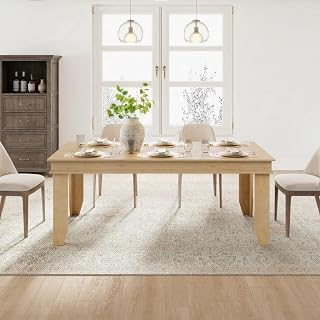


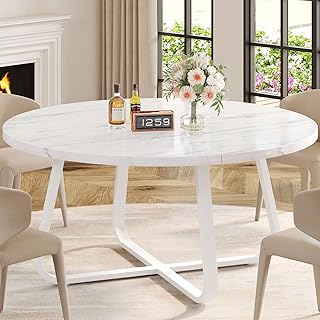


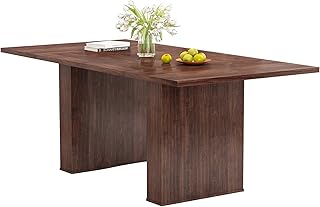


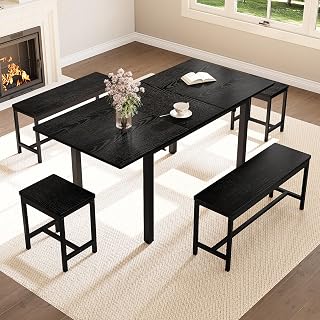


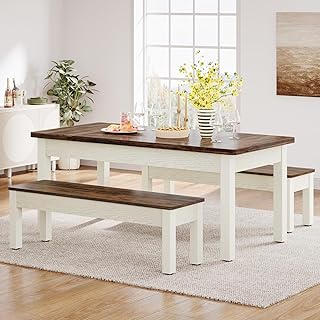


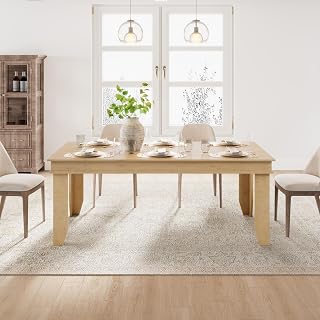


A luxury dining table is more than a large surface for meals. It is often the visual anchor of a dining room, so its proportions, materials, construction, finish, and overall design have a major effect on how the space looks and functions. For Canadian homes, the selection process also deserves attention to room dimensions, seasonal indoor conditions, maintenance requirements, and the practical realities of moving substantial furniture through entrances, stairways, elevators, and narrow hallways.
When comparing luxury dining tables for 2026, look beyond photographs and headline descriptions. A convincing product listing should provide useful information about dimensions, materials, table construction, seating capacity, finish, assembly requirements, and care instructions. Customer reviews can add useful context, but specifications should remain the starting point when comparing otherwise similar tables.
The word luxury can describe very different design approaches. One table may create an upscale appearance through a carefully selected natural wood top, while another may rely on polished stone, tempered glass, sculptural metalwork, or a dramatic contemporary silhouette. A high price alone does not establish quality.
The tabletop is usually the first feature people notice. Solid wood, engineered wood, veneer, stone, glass, and combinations of these materials can all produce an elegant result, but they have different characteristics.
A luxury dining table should be assessed as a piece of furniture rather than simply as a decorative object. Examine how the tabletop connects to the base, whether the support structure appears appropriately engineered for the table's dimensions, and whether the product information explains assembly and materials clearly.
For wooden tables, pay attention to how the manufacturer addresses natural movement. Wood responds to changes in temperature and humidity, so a well-designed table needs construction methods that accommodate normal material movement rather than treating wood like an entirely static material.
Solid wood is frequently associated with premium furniture because every piece can have distinctive grain, colour variation, and natural character. However, veneer should not automatically be considered inferior. A well-made veneered table can provide an exceptionally refined appearance and may offer practical advantages depending on the underlying construction.
When comparing the two, ask what parts of the table are actually solid wood and which parts use veneer or engineered panels. Product descriptions sometimes use broad material terminology that does not reveal the construction of the entire table.
Canada's diverse climate makes indoor environmental conditions worth considering. Heating during colder months can significantly change indoor humidity, while summer conditions vary considerably by region. Furniture should be placed and maintained according to the manufacturer's care guidance rather than assuming that every material responds identically.
Oak is a versatile choice for buyers who want visible grain and a substantial furniture appearance. It can work in both contemporary and traditional rooms, depending on the stain, edge profile, leg design, and overall silhouette.
Walnut is valued for its darker natural appearance and sophisticated grain. It can create a strong focal point in minimalist interiors, especially when paired with neutral walls, upholstered dining chairs, and restrained decorative accessories.
Marble delivers a high-end visual effect through natural veining and stone variation. It is also a material that requires realistic expectations. Marble can be porous and may be vulnerable to staining or etching, depending on the particular stone and finish. Always review the manufacturer's instructions for sealing, cleaning, heat exposure, and spill management.
Glass can be particularly useful where the goal is to preserve a sense of openness. Transparent surfaces allow more of the flooring and surrounding architecture to remain visible. The trade-off is that dust, fingerprints, smudges, and scratches can be more noticeable than on some opaque finishes.
Table shape affects both aesthetics and everyday usability. The right choice depends on room dimensions, circulation space, number of diners, chair size, and whether the table is primarily used for everyday meals, entertaining, working, or formal occasions.
Rectangular tables are among the most versatile choices for larger dining rooms and conventional layouts. Their long profile can visually emphasize the length of a room and provide substantial seating capacity. They are particularly practical where a dining room is wider in one direction than the other.
Round tables encourage a more conversational arrangement because diners face toward the centre rather than sitting along two opposing sides. They can work especially well in square rooms and smaller dining areas where sharp corners would interfere with circulation.
An oval table combines some of the visual qualities of a rectangular design with softer ends. Rounded corners can improve circulation in certain layouts while retaining a generous central dining surface.
Square designs can create a balanced appearance in compact or symmetrical rooms. They are most effective when there is sufficient clearance on all sides and when the expected number of diners matches the table's proportions.
Never choose a luxury dining table based solely on the number of chairs shown in a product photograph. Actual seating comfort depends on tabletop dimensions, leg placement, chair width, table-end clearance, and whether diners are expected to sit comfortably for extended meals.
Measure the dining area before shopping. Record the usable floor dimensions and identify doors, walkways, radiators, cabinets, kitchen islands, windows, and other features that affect circulation. Then compare those measurements with the assembled table dimensions rather than the packaged dimensions.
A table can technically fit inside a room and still be too large for comfortable use. Leave enough space for chairs to be pulled out without blocking major pathways. Consider the depth of the chairs as well as the tabletop itself.
An extendable dining table can be a practical choice for households that need a compact everyday configuration but occasionally host larger gatherings. However, extension mechanisms add mechanical components and require buyers to understand how the table operates.
Check the number and type of leaves, whether the leaves are stored within the table, how they are inserted, and whether the manufacturer specifies a different maximum seating arrangement when fully extended. Also consider whether the extended tabletop remains visually consistent with the main surface.
The base is not merely a styling feature. It affects legroom, stability, seating flexibility, and the visual weight of the table. Compare pedestal, trestle, four-leg, cross-leg, and sculptural bases according to how the table will actually be used.
Four-leg tables have a familiar structure and can provide predictable support. The position of the legs matters because corner placement can interfere with diners at the ends or restrict where chairs can be positioned.
A central pedestal can create more freedom for chair placement because there are fewer obstacles beneath the tabletop. This can be especially useful for round and oval tables, although the pedestal's footprint and stability remain important.
Trestle construction can produce a strong architectural look and may provide useful legroom depending on the exact design. Buyers should examine where the supports are positioned relative to dining chairs.
Contemporary luxury tables often use geometric or artistic bases as a major design feature. These can dramatically enhance a room but should be evaluated for practical leg clearance as well as appearance.
The finish influences colour, tactile feel, stain resistance, maintenance, and how easily everyday wear becomes visible. Two tables made from similar underlying materials can have very different practical characteristics because of their finishing systems.
For wood, determine whether the surface is described as natural, stained, lacquered, painted, oiled, or otherwise treated. For stone, identify the recommended cleaning products and whether sealing is required. For glass, confirm the care instructions and any relevant safety information provided by the manufacturer.
Dark finishes can create a dramatic formal appearance but may make dust and fingerprints more apparent. Lighter finishes can contribute to an airy aesthetic and may visually soften large furniture pieces. The choice should also account for flooring, wall colour, dining chairs, lighting, and the amount of natural light in the room.
A useful comparison should separate appearance from measurable specifications. Creating a simple shortlist makes it easier to identify meaningful differences between products that initially look similar.
A dramatic oversized tabletop may look impressive in a spacious showroom or professionally staged photograph but can overwhelm a normal dining room. Furniture photographs can also distort perceived scale, so measurements should always take priority.
Buyers sometimes concentrate on the tabletop and overlook the base until the table is assembled. A visually attractive base can become inconvenient if it occupies the same area needed by diners' legs or chair frames.
Terms such as wood finish, wood look, wooden construction, and natural wood appearance do not necessarily mean that every structural component is solid timber. Read the material specification carefully.
A high-maintenance surface may be perfectly appropriate for a formal dining room but less suitable for a household where the table is used every day. Consider how much time you realistically want to spend protecting and cleaning the surface.
Large dining tables can present logistical challenges even when the furniture fits the final room. Before ordering, consider door widths, staircases, elevator dimensions, turns in hallways, and any building access restrictions.
Do not assume that a product suitable for one tabletop material is safe for another. Stone, wood, lacquer, veneer, metal, and glass can require different cleaning methods. Follow the manufacturer's care instructions.
Modern dining rooms often benefit from clean geometry, restrained finishes, slim profiles, architectural bases, and a limited colour palette. Glass, dark wood, stone, and metal can all work effectively when the proportions remain balanced.
Contemporary interiors can accommodate more expressive silhouettes, mixed materials, curved forms, and sculptural bases. The strongest combinations typically establish one dominant visual feature rather than competing with several unrelated statement pieces.
Traditional dining rooms often pair naturally with substantial wood tables, detailed legs, classic silhouettes, and richer finishes. A large table can become particularly effective when balanced by appropriately scaled chairs and lighting.
Minimalist luxury relies heavily on proportion and material quality. A simple tabletop with carefully finished edges and a refined base can make a stronger statement than an overly decorative design.
For transitional or farmhouse-inspired rooms, natural wood tones, softened edges, and straightforward structural details can provide warmth while still looking sophisticated. Avoid selecting a table solely because it is labelled with a particular style; compare the actual shape, finish, and construction.
A dining table should be selected alongside the chairs rather than in isolation. Chair seat height, armrests, back width, upholstery thickness, and overall footprint can affect how comfortably the set works together.
Armchairs require additional attention because their arms must fit beneath or around the tabletop without creating an awkward seating position. Check the clearance between the floor and the underside of the table and compare it with the chair's dimensions.
Standard dining tables are generally designed around conventional dining-chair proportions, but individual products can vary. The important issue is the relationship between tabletop height, chair seat height, and leg clearance.
Proper maintenance starts with identifying the actual material and finish. There is no universal cleaning routine for luxury dining furniture.
Customer reviews are most useful when they are treated as supplementary evidence rather than a replacement for specifications. A high average rating can tell you that many customers were satisfied, but it does not necessarily answer whether a particular table is appropriate for your dining room.
Look for repeated themes across reviews. Comments about assembly difficulty, finish consistency, stability, packaging, missing components, actual appearance, and long-term satisfaction can reveal practical considerations that are difficult to determine from product photography.
Also distinguish between complaints about the product itself and complaints about delivery or retailer service. These are different issues and should be evaluated separately when comparing furniture.
When researching luxury dining furniture, established brands can provide useful reference points for construction styles, materials, and design language. Names such as Ashley, Signature Design by Ashley, Walker Edison, HOMCOM, VASAGLE, Nathan James, and Modway appear across different furniture categories and price segments. Availability and exact product ranges can change, so verify the current Canadian listing, dimensions, materials, and seller information before making a purchase.
Brand recognition should not replace product-level evaluation. A table from a familiar manufacturer can still be unsuitable for a particular room, while a less familiar brand may offer a design that better matches your requirements. Compare the individual specification, construction, finish, customer feedback, and current retailer terms.
The dining table should establish the visual scale of the room, but it should not necessarily be the only statement piece. Lighting, chairs, flooring, wall treatment, rugs, sideboards, and artwork should support the table rather than compete with it.
For a large statement table, a restrained chandelier or pendant arrangement can help maintain visual hierarchy. With a simpler table, distinctive lighting or upholstered chairs can introduce additional character. Rugs should be sufficiently large to accommodate both the table and chairs while allowing chairs to remain on the rug when pulled back.
Dining tables with glossy, glass, polished stone, or reflective finishes can interact strongly with overhead lighting. Consider glare and reflections when selecting the table position and light fixture. Natural light should also be considered because it can change how wood, stone, and coloured finishes appear throughout the day.
Luxury does not require a massive table. In a condo, apartment, townhouse, or compact dining area, proportion is often more important than physical size. Round and oval designs can reduce the visual impact of corners, while extendable models can provide flexibility without permanently occupying the space required for a large dining table.
Glass or visually open bases can also make a compact room feel less crowded, although maintenance requirements should be considered. Measure carefully and create a temporary outline on the floor using painter's tape before purchasing. This simple planning method can reveal whether chairs and walking paths will remain comfortable.
A large room can accommodate a substantial dining table, but simply buying the longest available model is not always the best approach. The table should be proportionate to the room and balanced with the scale of the chandelier, chairs, rug, sideboard, and surrounding architecture.
Long rectangular tables can create a formal focal point, while large round or oval tables can produce a more social arrangement. If entertaining is important, consider an extendable design that provides additional flexibility without forcing the everyday layout to accommodate the maximum number of guests.
The best value is not necessarily the table with the lowest price or the table with the highest price. A sensible comparison considers what you are receiving for the total cost: material quality, construction, design longevity, dimensions, functionality, maintenance requirements, and expected suitability for your home.
A premium-looking finish may be worthwhile if it fits the room and provides the characteristics you need. Conversely, paying considerably more for a design feature that does not improve your actual use of the table may not represent good value.
A premium dining table may not be appropriate when its care requirements conflict with everyday use. A delicate stone surface may be a poor match for someone who wants a low-maintenance family table. A very heavy design may be impractical in a home where furniture needs to be moved regularly. A large fixed table may also be a poor choice for a household that needs flexible space.
Likewise, a visually impressive design should be reconsidered if it leaves inadequate circulation space. Furniture that looks exceptional but makes everyday dining uncomfortable is not a successful purchase.
There is no single best table for every Canadian home. The right choice depends on room size, preferred material, seating requirements, interior style, maintenance tolerance, and budget. Start with measurements and construction requirements before narrowing the choice by appearance.
Not automatically. Solid wood offers natural material characteristics and can be highly desirable, while engineered substrates can provide consistency and dimensional stability when properly constructed. Compare the complete construction rather than judging the table solely by one material label.
They can require more care than some finished wood or other surfaces. Natural stone may require specific cleaning practices and, depending on the stone and finish, periodic sealing. Always follow the manufacturer's recommendations.
They can be, provided the construction is appropriate and the household is comfortable with regular cleaning. Glass tends to make fingerprints and smudges more visible, so maintenance expectations should be considered before purchase.
Choose according to the room's proportions and how people will use it. Rectangular tables are often efficient in elongated rooms, while round tables can work well in square spaces and encourage face-to-face conversation. Oval tables provide another option when softer corners are desirable.
An extendable table can be an excellent practical solution, but reliability depends on the specific construction and mechanism. Review the extension system, hardware, included leaves, maximum configuration, and customer feedback for the exact model.
The required space depends on chair dimensions, circulation needs, and the room layout. Measure the table together with the chairs in their pulled-out position and ensure that major walkways and doors remain functional.
Prioritise repeated comments about construction, stability, finish quality, assembly, actual dimensions, packaging, and long-term use. Reviews are most valuable when they provide specific observations rather than simply a high or low rating.
Follow the manufacturer's care instructions and use suitable coasters, placemats, trivets, and other protective accessories where appropriate. Promptly clean spills and avoid unsuitable chemicals, abrasive cleaners, excessive moisture, or heat exposure that the manufacturer warns against.
Choosing from photographs without verifying measurements and construction details is one of the most avoidable mistakes. Online images communicate style, but dimensions, materials, assembly requirements, care instructions, and retailer terms determine whether the table will actually work in your home.
The strongest luxury dining table purchase combines visual appeal with practical suitability. Start by measuring the room, determine how many people need to sit comfortably, establish your preferred materials, and decide how much maintenance you are prepared to provide. Then compare individual products using their specifications, construction details, customer feedback, and current Canadian retailer information.
For an independent buying decision, avoid treating a high price, impressive photograph, or familiar brand name as proof of superior quality. A well-proportioned table with suitable materials, sound construction, manageable maintenance requirements, and an appropriate design can provide more useful value than a larger or more expensive alternative that does not fit your home.
Before placing an order, recheck the current dimensions, material description, availability, delivery requirements, return conditions, warranty information, and total purchase cost. Product specifications and retailer policies can change, so the exact listing should always be verified at the time of purchase.