

♥ Wishlist
Compare 39 verified Bathroom Cabinets for Stylish and Practical Storage products in Canada. Reviews, ratings, pros, cons and buying advice updated for October 2026.


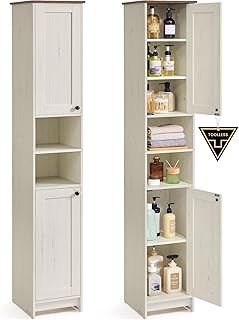


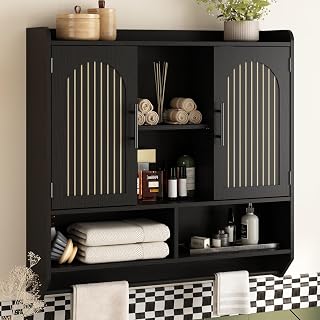

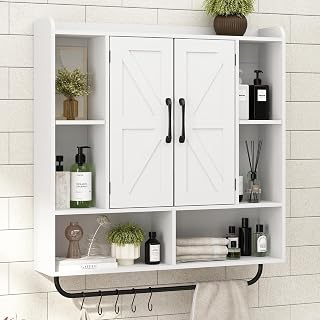


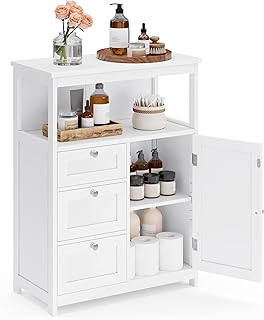


Choosing a luxury bathroom cabinet is about considerably more than selecting an attractive finish. The right cabinet has to work with the dimensions of the bathroom, accommodate plumbing, provide practical storage, resist the moisture and temperature changes common in Canadian bathrooms, and complement the quality of the countertop, sink, mirror, lighting and other fixtures.
This 2026 buying guide is designed for Canadian shoppers comparing luxury bathroom cabinets and vanities from different manufacturers and retailers. Rather than treating appearance as the only measure of quality, it focuses on construction, materials, storage design, installation requirements, hardware, finish durability, sizing and long-term practicality. Product specifications, customer feedback and current retailer information should always be checked before purchasing because individual models, configurations and availability can change.
The term “luxury” is used broadly in bathroom furniture. A premium-looking cabinet is not necessarily a premium-built cabinet, and a high price alone does not guarantee superior construction. A genuinely well-designed luxury bathroom cabinet should balance visual refinement with durable materials, accurate construction, smooth operation and thoughtful storage.
Look for evidence of quality in the details rather than relying solely on photographs. Consistent panel gaps, substantial hardware, well-finished exposed surfaces, carefully treated edges, adjustable doors or drawers and sensible interior organization are all useful indicators when comparing models.
Start with measurements rather than style. Common bathroom vanity widths vary considerably, and the correct size depends on the available wall, door swings, shower location, toilet position and required clearance around the basin.
Measure the available wall from several points because walls and floors are not always perfectly square. Record the maximum width, maximum depth and preferred height, then compare those measurements with the complete assembled dimensions provided for each cabinet.
Depth deserves particular attention in smaller Canadian bathrooms. A cabinet that technically fits against the wall can still create an uncomfortable walkway. Check the projection of doors, drawers, handles and countertop edges, not merely the cabinet box.
Luxury bathroom cabinets are available in configurations ranging from compact single-sink units to substantial double-sink vanities. Your household's routine should influence the choice.
The most attractive configuration is not necessarily the most convenient. Drawers are particularly useful for frequently accessed toiletries because the contents can be viewed from above. Doors can be advantageous for taller bottles, cleaning supplies and larger objects.
Some cabinets combine both approaches. A drawer-and-door arrangement can provide accessible everyday storage while retaining a larger compartment for less frequently used items.
Before choosing a configuration, consider the position of the plumbing. Sink drains and supply lines can occupy valuable interior space, so the nominal cabinet capacity may not equal the usable storage capacity.
Solid wood can provide an upscale furniture appearance and attractive natural character. However, wood is a hygroscopic material, meaning it responds to changes in environmental moisture. In a bathroom, proper finishing, construction and maintenance are therefore important.
Do not assume that every solid-wood cabinet is automatically superior to every engineered-wood cabinet. Construction quality, edge treatment, joinery, finish and moisture management all matter.
MDF is frequently used in painted cabinetry because its smooth surface can provide an even substrate for finishing. Its performance depends heavily on how the material is sealed and where it is used. Pay particular attention to exposed edges and areas that could experience repeated water contact.
Plywood is another common cabinet material and can offer a strong, dimensionally stable construction when appropriately manufactured and finished. When comparing cabinets, determine whether plywood refers to the cabinet box, drawer components, doors or only selected structural parts.
Engineered panels are widely used in bathroom furniture and should not automatically be treated as a sign of poor quality. The important questions are panel density, edge protection, fastening methods, surface treatment and exposure to moisture.
When comparing two cabinets, look beyond a simple “solid wood versus engineered wood” claim. A carefully constructed cabinet with appropriate moisture protection can be a more practical choice than a poorly assembled cabinet marketed primarily around a material label.
A cabinet may be sold alone, as a vanity with a countertop, or as part of a larger bathroom furniture set. Confirm exactly what is included before comparing prices or specifications.
Sink compatibility is especially important when purchasing a cabinet without a basin. Vessel, undermount, drop-in and integrated sink configurations can have different countertop and installation requirements.
Also check faucet-hole configuration. A vanity designed around a particular countertop drilling arrangement may not accommodate every faucet style without modification.
White remains a versatile choice because it works with both contemporary and traditional bathrooms. Warmer whites can pair well with natural wood, brushed metals and beige or stone-inspired surfaces, while cooler whites can reinforce a crisp modern design.
Oak, walnut-inspired and other wood finishes can soften a bathroom dominated by tile and hard surfaces. They work particularly well when the room already contains wood accents or neutral stone colours.
Black, charcoal and other dark finishes can create a dramatic luxury aesthetic. They may require more frequent wiping because fingerprints, water marks and dust can be more noticeable on certain dark surfaces.
Grey cabinets can provide a neutral foundation that works with a wide range of countertops and wall finishes. Greige and warmer neutral tones can be useful when a bathroom contains beige, cream or warm stone elements.
Handles, pulls, knobs and hinges influence both appearance and everyday usability. Compare the hardware finish with faucets, shower controls, towel bars and lighting rather than choosing each component independently.
Soft-close hardware is another feature worth examining. It can reduce noise and help prevent drawers and doors from being repeatedly slammed. However, the presence of “soft-close” should not replace an assessment of the cabinet's overall construction.
Soft-close systems use mechanisms that control the final portion of a drawer or door's movement. In a well-designed cabinet, this produces a quieter and more controlled closing action.
When comparing products, investigate whether soft-close hardware is included on all doors and drawers or only selected components. Also look for adjustability, particularly if the cabinet is expected to remain in service for many years.
Drawer construction is equally important. Check whether drawers use full-extension runners, how much usable depth they provide and whether the internal layout leaves enough room for common bathroom products.
A luxury bathroom should look organized without requiring constant effort. Storage design therefore deserves as much attention as the exterior appearance.
Consider what you actually store. A cabinet with many small compartments may look highly organized but become inconvenient if your household primarily uses tall bottles. Conversely, a large open compartment may waste valuable vertical space when most stored items are small.
Installation requirements should be reviewed before buying rather than after the cabinet arrives. Confirm whether the unit is fully assembled, partially assembled or supplied as a flat-pack product.
Check the location of water supply lines, drain pipes, shutoff valves and electrical components. A cabinet's internal shelves or drawers may conflict with existing plumbing even when its exterior dimensions appear correct.
Wall-mounted models require particular attention to mounting height and wall structure. If the product is heavy, the countertop and sink add additional load, so the installation method should follow the manufacturer's instructions and applicable local requirements.
Professional installation can be worthwhile when plumbing, electrical work, wall reinforcement, countertop installation or significant bathroom modifications are involved. Always follow local Canadian building and plumbing requirements applicable to the project.
Use a tape measure and record dimensions in a consistent unit. Canadian retailers may list dimensions in inches, while some specifications may also provide metric measurements.
For renovation projects, do not rely solely on the dimensions of the old vanity. Existing installation conditions may have been customized around that particular unit.
When several models look similar, create a specification checklist. This helps prevent a visually attractive cabinet from winning simply because of photography or styling.
Brand recognition can help narrow a large selection, but it should not replace model-level research. Established names such as Kohler, American Standard, Delta, Glacier Bay, IKEA and Wyndham Collection offer different approaches to bathroom furniture and fixtures. A particular model still needs to be evaluated according to its own materials, dimensions, configuration, hardware and current customer feedback.
When browsing products through Amazon or other Canadian retailers, compare the manufacturer's specifications with the retailer's listing. Pay attention to the exact model number because similarly named vanities can differ in size, finish, countertop configuration or included accessories.
For an independent buying decision, verified customer reviews can be useful for identifying recurring concerns about assembly, finish consistency, damaged components, drawer alignment or installation complexity. Reviews should be interpreted as supporting evidence rather than as a substitute for the manufacturer's technical specifications.
A high average rating can be helpful, but the distribution and substance of reviews are more informative than a single score. Look for repeated comments across multiple customers rather than treating an isolated complaint or compliment as definitive.
Customer reviews can change over time, particularly when manufacturers revise a product or retailers change fulfillment arrangements. Always review current information before making a purchase.
Luxury bathroom furniture is highly visual, but photographs rarely show internal storage, drawer construction or the practical effect of plumbing placement. Treat styling as one part of the decision rather than the complete evaluation.
A cabinet can be excellent while the selected sink configuration is unsuitable for your installation. Confirm exactly what is included and whether the countertop accommodates your preferred faucet and basin.
Maximum width is not always the ideal width. Leaving sufficient circulation space can make the bathroom substantially more comfortable, especially in smaller ensuite bathrooms.
Measure how the vanity will function with drawers fully extended and doors open. A cabinet that fits when closed may interfere with another fixture when opened.
Bathroom furniture encounters moisture, but that does not mean every cabinet component is waterproof. Look for specific material and finish information and protect the cabinet from prolonged standing water.
Deep drawers can provide excellent storage, but plumbing can reduce their usable capacity. Check internal dimensions and the location of plumbing cutouts before selecting a drawer-heavy configuration.
Two similarly priced vanities can represent very different packages. One may include a countertop and sink while another may include only the cabinet. Always compare the complete specification.
Storage requirements vary according to the bathroom's purpose. A guest bathroom may need only basic toiletries and spare towels, while a primary bathroom may need dedicated space for cosmetics, grooming products, hair tools, medicines, cleaning supplies and multiple people's personal items.
Make a quick inventory before shopping. Group items by size and frequency of use, then select cabinet storage around those groups. Frequently used items should be easy to reach, while less frequently used supplies can occupy lower or deeper compartments.
If the cabinet provides limited storage, consider the wider bathroom system rather than trying to make the vanity hold everything. A medicine cabinet, linen cabinet or tall storage unit can complement the vanity and reduce countertop clutter.
A luxury vanity should look intentional alongside the rest of the room. Coordinate the cabinet with the countertop, wall tile, floor tile, faucet, mirror, lighting and other metal finishes.
Luxury does not require every surface to be visually elaborate. A carefully proportioned cabinet, quality countertop and consistent hardware can create a more sophisticated result than a room filled with competing decorative elements.
Proper maintenance helps preserve the appearance of bathroom cabinetry. Cleaning instructions should always follow the manufacturer's recommendations for the specific material and finish.
A compact bathroom does not require a low-end vanity. The key is selecting a cabinet that uses available space efficiently.
Wall-mounted cabinets can visually increase the amount of visible floor area. Narrow-depth vanities can improve circulation, while drawer configurations can make better use of limited cabinet width. Light finishes may also create a more open visual effect, although colour should ultimately reflect the overall design.
For small bathrooms, measure every surrounding fixture before ordering. Pay special attention to toilet projection, shower-door movement and bathroom-entry doors. A few inches can determine whether the finished layout feels comfortable or crowded.
Double vanities are attractive in larger primary bathrooms, but two sinks are not automatically better for every household. They consume additional countertop and cabinet width and require a layout that allows both users to move comfortably.
Consider whether you need two separate sink areas, whether the plumbing layout supports the configuration and whether the additional countertop space will actually improve your routine. A wide single-sink vanity can sometimes provide more continuous countertop space and useful storage than a divided double-sink arrangement.
Furniture-style bathroom cabinets can make the vanity feel more like a custom piece of interior furniture. They are particularly suitable for traditional, transitional and luxury-inspired bathrooms where the vanity is intended to be a visual focal point.
Look closely at legs, feet, decorative panels and exposed edges. These details can make cleaning more difficult if they create narrow recesses or complicated profiles. A beautiful cabinet should remain practical after daily use, not only when photographed.
Floating vanities are especially popular in contemporary bathroom design because their elevated installation produces a clean horizontal line and exposes part of the floor beneath.
When comparing floating models, pay close attention to mounting instructions and wall requirements. The cabinet's apparent simplicity does not eliminate structural considerations. Installation must account for the combined weight of the vanity, countertop, sink and stored contents.
The interior is where the quality of a bathroom vanity becomes apparent during everyday use. Open every available door and drawer when possible, or study detailed manufacturer photographs and dimensions.
Prioritize storage, countertop space, durable hardware and a configuration suited to daily use. If two people use the bathroom simultaneously, evaluate a double vanity against a wide single vanity rather than assuming one configuration is universally better.
Measure carefully because ensuites often have tighter circulation. A premium cabinet with efficient internal storage can be more useful than a larger decorative model.
Prioritize easy maintenance, balanced proportions and enough storage for towels and basic toiletries. A simpler cabinet can be the better investment when the bathroom receives relatively light daily use.
In a powder room, visual impact can be more important because storage requirements are generally lower. A compact vanity with a distinctive finish, countertop or hardware can become a design feature without occupying excessive floor space.
Start with dimensions, not brand names. Eliminate every cabinet that cannot comfortably fit the room or accommodate the plumbing. From the remaining models, compare storage configuration, construction materials, finish, hardware and included components.
Next, examine customer feedback and product documentation. If a listing makes a broad quality claim but provides little information about construction, treat that as a reason to investigate further rather than assuming the cabinet is premium.
Finally, compare the complete installed cost. A cabinet that appears inexpensive can require additional purchases for a countertop, sink, hardware or other components, while a more comprehensive vanity package may include several of those items. The objective is not to find the lowest advertised price but to identify the best combination of quality, functionality, dimensions and total project value.
No. Price can reflect materials, design, brand positioning, included components and construction complexity, but it does not independently prove superior quality. Compare specifications and construction details at the model level.
Not necessarily. Solid wood can offer attractive furniture-like construction, but engineered materials such as plywood and MDF can also be appropriate when correctly manufactured, sealed and finished for the application.
Choose according to what you store. Drawers are convenient for frequently used smaller items, while doors can accommodate taller products and larger storage areas. A combination can provide the best balance.
Neither is universally better. Floating designs suit modern rooms and can make the floor appear more open, while freestanding cabinets can provide a traditional furniture aesthetic and substantial storage.
It is a worthwhile convenience feature, particularly in a frequently used bathroom. However, it should be considered alongside cabinet construction, drawer quality, dimensions and finish durability.
Check the exact dimensions, material specifications, included components, assembly requirements, current customer feedback and installation requirements. Product photographs should not be treated as a substitute for technical specifications.
Measure the available wall and surrounding clearances first. Then consider storage needs, sink configuration, countertop requirements and the amount of comfortable walking space that remains when doors and drawers are open.
They can be, but indoor humidity and temperature conditions vary considerably between homes and regions. Good ventilation, appropriate installation and following the manufacturer's maintenance instructions are important for protecting bathroom furniture.
The best luxury bathroom cabinet is the one that fits the room, supports the way the bathroom is used and provides an appropriate combination of construction quality, storage, finish and design. Do not make the decision solely from a product photograph or a star rating.
For Canadian shoppers, compare the exact model specifications, verify dimensions in the context of the complete bathroom layout, investigate the cabinet materials and hardware, and establish exactly what is included in the package. Read current customer feedback for practical installation and durability observations, while giving greater weight to manufacturer specifications for technical facts.
Whether you prefer a minimalist floating vanity, a traditional furniture-style cabinet, a natural wood appearance, a dramatic dark finish or a classic white design, careful comparison can help you avoid expensive compatibility and installation mistakes.