

♥ Wishlist
Compare 51 verified Bookcases for Stylish Storage in Canada products in Canada. Reviews, ratings, pros, cons and buying advice updated for October 2026.


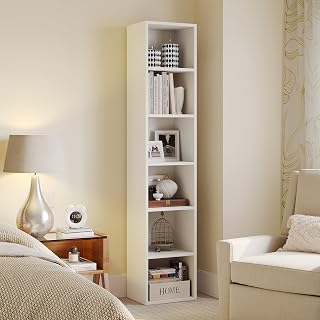


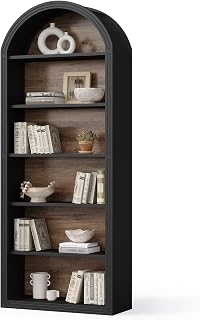


A luxury bookcase should do more than provide shelves for books. In a well-designed room, it can become a major architectural feature, a display cabinet for collectibles, a practical storage solution, or a visual anchor behind a desk, sofa, dining area, or reading chair. The best choice depends on the room, the weight and size of the items being stored, the materials, construction, finish, proportions, and the amount of maintenance you are prepared to provide.
For Canadian buyers, it is also worth considering room dimensions, delivery access, assembly requirements, seasonal indoor humidity changes, and the difference between solid wood, engineered wood, veneer, metal, glass, and mixed-material construction. A bookcase that looks impressive in a product photograph may not be the right choice once its dimensions, shelf capacity, door clearance, and installation requirements are considered.
Luxury is not determined by a single material or decorative style. A sophisticated bookcase usually combines several characteristics: balanced proportions, carefully selected materials, durable hardware, consistent finishing, strong construction, and details that remain attractive beyond current interior-design trends.
Material selection is one of the most important decisions when comparing luxury bookcases. Different materials offer different combinations of appearance, stability, weight, maintenance, and price.
Solid hardwood can provide a substantial, traditional appearance and can often be refinished when the construction and finish permit it. Oak, walnut, maple, cherry, and other hardwoods can produce very different visual results. The important point is to examine the actual construction rather than assuming that a product described as “wood” is made entirely from solid hardwood.
Solid wood can also respond to changes in temperature and humidity. In Canada, where indoor environments may become particularly dry during the heating season, normal wood movement should be considered when choosing and maintaining substantial wooden furniture.
A quality veneer uses a thin layer of real wood over a stable substrate. It can deliver an authentic wood appearance while allowing manufacturers to create consistent panels and attractive grain patterns. Veneer is not automatically inferior to solid wood; the quality of the substrate, veneer thickness, edge treatment, joinery, and finishing process matter considerably.
Engineered wood products can offer useful dimensional stability and consistent surfaces. They are common in contemporary furniture and can be finished to resemble natural timber, painted, laminated, or combined with metal and glass. When assessing an engineered-wood bookcase, pay close attention to panel thickness, edge finishing, shelf reinforcement, back-panel construction, and the quality of the hardware.
Metal frames paired with wood, veneer, glass, or stone-effect surfaces can suit contemporary and industrial interiors. Look for a rigid frame, properly finished welds or joints, durable coating, and shelf supports appropriate for the intended load.
Product dimensions should be treated as a starting point rather than a minor detail. Before purchasing, compare the complete exterior dimensions with the available wall space and then consider how the unit will actually enter the room.
Open shelving provides immediate access and makes books and decorative objects part of the room's visual design. It works particularly well when you want to create a library wall or display a carefully arranged collection.
The trade-off is maintenance. Open shelves collect dust more readily, and the contents remain visible at all times. If the bookcase is positioned near a kitchen or in an area exposed to frequent household activity, this may influence your decision.
Glass doors can create a more formal furniture appearance while helping protect books and collectibles from dust. They can be especially useful for valuable editions, decorative pieces, ceramics, framed objects, or collections that you want to display without leaving every item exposed.
Check whether the glass is described as tempered or otherwise safety-rated, how the doors are hinged, whether the shelves are adjustable, and how easily the glass surfaces can be cleaned.
Lower cabinets or concealed compartments are useful for items that do not contribute to the room's visual presentation. A combination of open shelves above and closed storage below can provide a practical balance between display and organization.
Traditional designs often use richer wood tones, moulded details, framed doors, decorative cornices, turned or shaped elements, and classic proportions. They can complement formal dining rooms, studies, libraries, and rooms furnished with traditional seating.
Contemporary bookcases generally emphasize clean lines, restrained ornamentation, geometric forms, neutral finishes, metal accents, and efficient storage. They are suitable for modern condos, minimalist interiors, executive offices, and open-plan living spaces.
Transitional furniture combines traditional warmth with simpler contemporary lines. This can be a versatile choice when the room already contains a mixture of classic and modern pieces.
Mid-century-inspired bookcases commonly feature warm timber tones, tapered legs, clean horizontal lines, and a lighter visual footprint. They can work particularly well when books and decorative objects need to be displayed without making the room feel visually heavy.
When comparing premium furniture, small construction details can matter more than decorative styling.
Measure more than the empty wall. Start by recording the maximum available width, height, and depth. Then check baseboards, electrical outlets, radiators, vents, windows, doors, switches, and nearby furniture.
For tall furniture, measure the ceiling height at the installation location rather than relying on a measurement taken elsewhere in the room. Also consider whether the bookcase can be tilted or assembled upright. A unit that fits the wall may still be impossible to maneuver through a staircase or doorway.
For apartments and condominiums, measure elevator doors and interior corridors where relevant. If the furniture arrives flat-packed, check the dimensions of the largest package and the manufacturer's assembly instructions before ordering.
Do not choose a bookcase solely because it has a large shelf count. Storage capacity depends on shelf width, depth, height, spacing, and usable surface area. A unit with fewer but wider shelves may be more useful for large-format books and decorative objects, while a tightly spaced bookcase can be better for standard paperback and hardcover collections.
Consider separating the intended contents into categories before buying:
This simple exercise can reveal whether you need adjustable shelves, deeper compartments, cabinets, or a combination of storage types.
Prioritize appropriate depth, manageable weight, delivery dimensions, and anti-tip provisions. A visually substantial but relatively shallow bookcase can create a luxury appearance without consuming as much floor space as a deep library cabinet.
Larger homes provide more flexibility for floor-to-ceiling installations, paired bookcases, library walls, and furniture combinations. In these settings, matching multiple units by finish and proportion can create a built-in appearance without necessarily using fully custom cabinetry.
For an office, consider a combination of bookshelves and concealed storage. Documents, technology, stationery, and professional books often require different storage formats. A bookcase with lower cabinets can help keep frequently used equipment and paperwork visually organized.
In living rooms, the bookcase should complement the sofa, coffee table, lighting, media furniture, and artwork. Avoid filling every shelf. Leaving deliberate negative space can make an expensive piece look more sophisticated and can prevent the room from becoming visually cluttered.
A tall cabinet or bookcase can provide storage for cookbooks, serving pieces, decorative objects, and dining-room accessories. Glass doors may be particularly appropriate when the furniture doubles as a display cabinet.
Indoor conditions can vary considerably across Canada. Heating during colder months can reduce indoor humidity, while seasonal changes can affect wooden furniture. Avoid placing wooden bookcases directly against heat sources or in locations where they are exposed to excessive moisture.
Use the care instructions supplied by the furniture manufacturer for the specific finish. In general, dust with a soft, suitable cloth and avoid saturating wood surfaces with water or household cleaners that have not been approved for the finish. Direct and prolonged sunlight can also affect certain finishes and materials.
A dramatic photograph does not reveal shelf capacity, construction, weight, assembly difficulty, or long-term maintenance. Compare specifications as carefully as the styling.
A thin or unfinished back may be acceptable when the unit sits against a wall, but it can become an important consideration if the bookcase is used as a room divider.
A collection of hardcover books can create substantial concentrated loads. Pay particular attention to wide shelves, where unsupported spans can be more vulnerable to deflection.
Extra depth is not automatically extra value. Excessively deep shelving can waste floor space and make books sit too far back, reducing usability and visual clarity.
Before ordering a large piece, consider the route from the building entrance to its final position. Package dimensions can be as important as the assembled dimensions.
A room filled with identical finishes and furniture shapes can feel staged. Consider complementary rather than perfectly matching materials and silhouettes.
Tall bookcases should be evaluated for stability and installed according to the manufacturer's safety instructions. Anti-tip anchoring is especially important in homes with children or pets.
A useful comparison should evaluate the entire ownership proposition rather than a single headline feature. Create a shortlist and compare each candidate against the same criteria.
When building a shortlist, Canadian shoppers may encounter products from a mixture of furniture specialists, established home-furnishing companies, and marketplace brands. Familiar names such as IKEA, Structube, EQ3, West Elm, Crate & Barrel, CB2, Article, Wayfair, and Ethan Allen can be useful reference points when comparing design language, construction approaches, and available configurations.
Brand recognition should not replace product-level research. Even within the same manufacturer, materials, construction, hardware, dimensions, and assembly requirements can vary substantially between collections. Always evaluate the exact model rather than assuming that every product from a particular brand has the same build quality.
Customer reviews can provide useful information that specifications sometimes omit, but they should be interpreted carefully. Look for patterns across multiple reviews rather than relying on one unusually positive or negative comment.
Verified customer feedback can be particularly useful when combined with the manufacturer's published dimensions and specifications. However, individual experiences are not a substitute for confirming the technical details of the exact product.
The contents of a bookcase influence its perceived quality almost as much as the furniture itself. Avoid treating every shelf as a storage bin. Instead, create visual variation by combining horizontal and vertical stacks, books, framed photographs, ceramics, sculpture, plants where appropriate, and carefully selected decorative objects.
Leave some empty space between groups. Use larger objects as visual anchors and smaller objects as supporting details. If the shelves are adjustable, vary the vertical spacing according to the objects you actually intend to display instead of accepting uniform gaps that leave excessive unused space.
Lighting can transform a bookcase from ordinary storage into a focal point. Options include integrated shelf lighting, concealed LED strips, picture lights, wall sconces, or carefully positioned room lighting. When selecting lighting, consider colour temperature, glare, heat generation, cable routing, and whether the light will shine directly into glass surfaces.
For valuable books and artwork, avoid assuming that brighter is always better. Prolonged exposure to intense light can affect some materials and finishes. Follow appropriate conservation guidance for particularly valuable or sensitive collections.
Freestanding luxury bookcases offer flexibility. They can be moved, rearranged, or replaced as your needs change. They can also provide a more practical solution for renters or homeowners who do not want permanent cabinetry.
Built-in shelving provides a more architectural appearance and can make use of unusual wall dimensions, alcoves, and floor-to-ceiling space. However, it generally involves greater planning, installation work, and commitment to the room's existing layout.
If you are comparing the two, consider not just appearance but also permanence, storage efficiency, installation requirements, future room changes, and the value of preserving floor space.
A dedicated home library requires a different approach from a single decorative bookcase. Consider repeated shelf modules, consistent spacing, sufficient lighting, comfortable access to upper shelves, and a logical organization system. For a large collection, adjustable shelves can provide more flexibility as book sizes change.
For floor-to-ceiling arrangements, stability and installation become especially important. Tall units should be assessed as furniture systems rather than simply individual shelves, and appropriate wall anchoring should be considered.
If the primary purpose is display rather than book storage, prioritize shelf spacing, lighting, glass protection, visibility, and weight distribution. A bookcase with shallow adjustable shelves may be more suitable for smaller collectibles than a deep traditional library unit.
Glass doors can help limit dust while keeping objects visible. For valuable collections, however, consider the environmental requirements of the objects themselves, including light exposure, humidity, temperature, and security.
A tall unit can maximize vertical storage while using relatively little floor area. It can work particularly well in compact rooms where horizontal furniture would interfere with circulation. The downside is accessibility: the highest shelves may require a safe step stool or ladder.
A wider bookcase is often easier to access and can create a strong horizontal focal point. It may also provide more flexibility for large decorative objects. The right choice depends on ceiling height, room proportions, storage requirements, and how frequently the upper shelves will be used.
Adjustable shelving is strongly worth considering if your collection is varied. Standard novels, oversized art books, binders, collectibles, and decorative objects rarely share the same ideal shelf height. Adjustable shelves allow the interior to evolve without replacing the furniture.
For a bookcase intended mainly for a uniform collection of similarly sized books, fixed shelves may be perfectly adequate. The decision should therefore be based on expected use rather than treating adjustability as an automatic requirement.
The purchase price is only one part of the overall cost. Consider whether assembly is required, whether professional installation is appropriate, whether the furniture requires special care, and whether accessories such as lighting, anchoring hardware, or organizational inserts are necessary.
When comparing two products with similar appearances, examine the construction and specifications carefully. Paying more can make sense when the additional cost corresponds to meaningful improvements such as stronger construction, better hardware, more useful adjustability, superior materials, or a finish that better suits your requirements. A higher price alone is not evidence of better quality.
There is no universal best design. A high-quality wood bookcase can suit a traditional room, while a streamlined combination of wood, metal, and glass may be better for a contemporary space. The strongest choice is one whose proportions, materials, finish, and storage configuration match the room and its intended use.
Not necessarily. Solid wood offers natural grain and a substantial feel, while quality engineered materials can provide consistent dimensions and useful stability. Compare the complete construction, shelf design, hardware, finish, and manufacturer specifications rather than judging quality from the material name alone.
The appropriate depth depends on what you plan to store. Standard books generally do not require extremely deep shelves, while large art books and display objects may benefit from additional depth. A deeper bookcase also consumes more floor space, so measure the room before selecting a size.
Yes, particularly when you want to display books or collectibles while reducing exposure to household dust. Glass doors also create a more enclosed, formal appearance. Consider the glass type, door hardware, cleaning requirements, and available clearance.
Tall furniture should be evaluated for tip-over risk and installed according to the manufacturer's safety instructions. Appropriate anchoring is an important consideration, particularly in households with children or pets.
Improve the presentation through intentional styling. Group books by subject, colour, or size where appropriate; mix vertical and horizontal arrangements; introduce a limited number of decorative objects; vary visual height; and leave negative space between groups. Good lighting and a coordinated colour palette can also make a substantial difference.
Look beyond the overall rating. Repeated comments about assembly, shelf strength, stability, finish accuracy, hardware, packaging, delivery damage, and long-term durability can provide more useful buying information than isolated comments.
Yes. Choose a design with dimensions appropriate to the room, particularly a manageable depth. Tall, relatively shallow shelving can provide substantial vertical storage without taking as much floor space as a wide or very deep unit.
Cleaning frequency depends on the room, materials, and amount of dust. Dust open shelves regularly and follow the manufacturer's instructions for cleaning wood, veneer, metal, and glass. Avoid applying unapproved chemicals or excessive moisture to finished surfaces.
There is no single specification that determines suitability. Dimensions and shelf capacity are essential, but material, construction, adjustability, stability, finish, assembly requirements, and intended use should all be considered together.
The best luxury bookcase is not necessarily the largest, most expensive, or most decorative model. It is the one that provides the right combination of construction quality, usable storage, appropriate dimensions, attractive materials, dependable hardware, practical maintenance, and safe installation for your particular space.
For Canadian shoppers comparing options in 2026, take time to verify the specifications of the exact model, compare customer feedback from multiple sources, measure the delivery route, and consider how the furniture will be used several years from now. A thoughtful comparison can help distinguish a genuinely well-designed luxury bookcase from a product that simply looks impressive in photographs.