

♥ Wishlist
Compare 48 verified Baby Gates for Safer Spaces at Home products in Canada. Reviews, ratings, pros, cons and buying advice updated for October 2026.


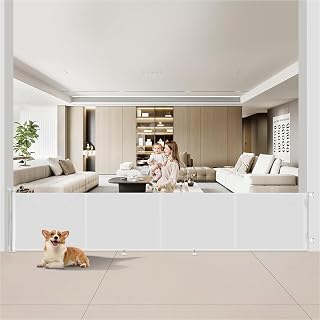


Choosing a luxury baby gate in Canada is about more than appearance. A well-designed gate needs to create a dependable barrier while fitting the architecture, traffic flow and interior style of your home. For 2026, the most useful comparison is therefore not simply “which gate looks best,” but which combination of mounting method, opening width, materials, locking system, installation requirements and everyday usability makes sense for your particular space.
This independent buying guide focuses on the features that matter when comparing premium and design-conscious baby gates in the Canadian market. Product specifications, included hardware, dimensions and current retailer availability can change, so check the latest manufacturer and retailer information before purchasing.
The term luxury baby gate generally describes a product where design, finish and construction receive more attention than they do on basic utility models. That can mean a minimalist profile, premium-looking metal or wood, concealed or refined hardware, smoother operation, a more substantial frame, or a finish intended to coordinate with contemporary interiors.
However, a higher-end appearance should never be treated as a substitute for appropriate safety features. The best premium gate is one that combines an attractive design with a secure installation, dependable closure and a configuration suitable for the location where it will be used.
Baby gates are safety products, so visual appeal should be evaluated only after basic suitability has been established. Before comparing colours or finishes, identify the exact opening, determine whether the installation point is a stairway, and establish which mounting method the manufacturer permits for that location.
In Canada, consumers should pay attention to applicable Canadian product-safety requirements and manufacturer instructions rather than assuming that a product designed for another market has identical requirements. A gate purchased through an international marketplace may have different instructions, dimensions or compliance information from a Canadian-market version.
For a stairway, installation deserves particular care. A pressure-mounted design that works well between two rooms is not automatically appropriate for every stair configuration. Follow the manufacturer's instructions for the specific location, including requirements concerning mounting surfaces, hardware and the direction in which the gate opens.
One of the most important buying decisions is the mounting system. These two approaches solve different problems and should not be selected purely on convenience.
Pressure-mounted gates use tension against opposing surfaces rather than being permanently fastened to the surrounding structure. Their principal advantage is convenience: they can be useful in suitable doorways and room transitions where drilling is undesirable.
Hardware-mounted gates are attached to the surrounding structure using dedicated mounting hardware. They can provide a more integrated installation and are particularly important to consider where the manufacturer specifies hardware mounting.
One of the most common purchasing mistakes is choosing a gate based on its appearance before measuring the installation area. Measure the clear opening at the location where the gate will actually sit, rather than relying on the nominal width of the doorway or room.
For an accurate comparison, record the minimum and maximum width where relevant, the available mounting surface on each side, the height of any baseboard or trim, and the shape of the surrounding walls. For unusual openings, also consider whether the gate requires additional extensions or specially configured hardware.
Do not assume that an extension from one model can be used with another model simply because the products appear similar. Compatibility should be confirmed against the manufacturer's specifications for the exact gate.
Material choice has a significant effect on both appearance and perceived quality. Premium gates commonly use combinations of metal, wood, engineered components and durable finishes. The right choice depends on the room, cleaning requirements and design language of the home.
Metal is particularly well suited to modern interiors because it can support slim profiles and restrained visual styling. Black, white, silver-toned and other neutral finishes can coordinate with contemporary furniture, stair railings and architectural hardware.
When comparing metal models, examine the frame construction, hinge areas, latch components and finish rather than judging quality from colour alone. A sophisticated finish is valuable aesthetically, but the gate's mechanical components deserve equal attention.
Wood can be a natural choice for homes featuring hardwood floors, traditional furniture or warm neutral interiors. Look for a finish that complements rather than competes with existing wood tones.
Wooden gates can also introduce visual warmth, although the precise construction, finish and care requirements vary substantially between products. Avoid assuming that every wood-look gate is made from solid wood; inspect the stated materials and construction details.
Some premium designs combine metal frames with wood or wood-effect details. This can provide a useful middle ground between contemporary minimalism and traditional interior styling. For an expensive-looking installation, consistency with existing cabinet hardware, flooring and stair components can matter more than the gate's standalone appearance.
The latch is one of the components worth examining closely because a beautiful gate can still be frustrating if its operating mechanism is poorly suited to everyday use. Consider whether the gate is intended to be opened with one hand, whether it closes automatically, and whether the locking state can be readily confirmed.
Parents and caregivers often carry a child, laundry, groceries or other objects while moving through the home. A mechanism that requires awkward manipulation may become inconvenient in daily use. At the same time, ease of adult operation should not mean that the barrier can be casually opened by a young child.
Different luxury baby gates use different opening arrangements. A single-direction gate may be useful in locations where opening toward one side is preferable, while a double-direction design can offer flexibility in suitable room transitions.
For stairs, opening direction and swing clearance deserve special attention. Never choose a configuration simply because it looks convenient. Follow the manufacturer's instructions for the particular stair arrangement and installation method.
Also consider what happens when the gate is fully open. A wide swinging panel can occupy valuable floor space, strike nearby furniture or interfere with a narrow passage. In compact rooms, the gate's folded or open position can be almost as important as its closed dimensions.
Standard doorway dimensions are not the only use case. Open-plan homes, wide living-room transitions and unusually shaped spaces may require configurable gates or additional panels.
When comparing an extra-wide system, verify the manufacturer's stated configuration range and the exact number of panels or extensions included. A product described as expandable may require separately purchased components for a particular width.
Retractable gates can appeal to homeowners who want a barrier that visually recedes when not in use. They are particularly attractive in minimalist interiors where a permanent framed panel would interrupt the room's appearance.
The trade-off is that the barrier mechanism, mounting points and fabric or mesh construction should be examined carefully. A retractable design is not automatically better than a rigid gate; its suitability depends on the opening, installation requirements and manufacturer's instructions.
For buyers prioritising luxury aesthetics, retractability can be valuable because it reduces visual clutter. For buyers prioritising a substantial architectural appearance, a rigid metal or wood gate may provide a more furniture-like presence.
Brand recognition can help narrow a shortlist, but it should not replace product-level comparison. Different models from the same manufacturer can have very different widths, mounting systems, materials and intended applications.
Brands commonly encountered when researching baby gates and child-safety products include Regalo, Summer Infant, Evenflo, North States, Cardinal Gates, Munchkin and Perma Child Safety. Availability and individual model specifications vary in Canada, so verify the current product documentation before purchasing.
A luxury gate is not necessarily safer simply because it costs more or has a more sophisticated appearance. The premium category is primarily useful for consumers who want safety functionality combined with stronger design integration and higher attention to materials or finish.
The sensible approach is to establish a minimum safety and installation standard first, then compare design, convenience and finish within that shortlist.
Canadian homes can present varied architectural conditions, from modern open-plan interiors to older houses with substantial trim, uneven transitions and distinctive stair layouts. That makes installation compatibility especially important.
Before buying, inspect the exact location rather than assuming that a product marketed for “doors and stairs” will fit every Canadian home. Baseboards, mouldings, banisters, angled walls and unusual stair posts can change the installation requirements considerably.
Baby gates are normally installed indoors, but seasonal changes can still affect the surrounding environment. Homes with significant changes in humidity or temperature may experience movement in certain building materials. A gate should be checked periodically to ensure that its mounting remains secure and that the frame and latch continue to operate as intended.
For homes with heated floors, thick carpets or unusual floor transitions, also consider how the gate's bottom clearance and mounting geometry interact with the floor surface.
A baby gate does not have to look like an afterthought. In a carefully designed home, the finish can be coordinated with existing architectural details.
The goal is not to make a safety barrier invisible at all costs. A well-chosen premium gate can become visually consistent with the architecture while remaining clearly identifiable as a functional barrier.
Measurements should come before model selection. A gate that is too narrow, too wide or incompatible with the mounting surface can turn an attractive purchase into an unusable one.
Customer reviews can reveal useful information about everyday usability, but reviews are context-dependent. A gate that works well in a doorway may not be appropriate for a particular staircase. Use reviews alongside the manufacturer's specifications and installation instructions.
A premium finish can improve the look of a gate without necessarily improving its structural performance. Examine the actual frame, hinges, latch, mounting system and specifications.
Baseboards can interfere with pressure mounting and create uneven contact surfaces. Measure the actual installation area and determine whether the selected gate includes or permits an appropriate solution.
Extra width often requires manufacturer-approved extensions. Do not mix components merely because their dimensions appear compatible.
Even a straightforward-looking gate can have important installation requirements. Read the complete instructions before drilling, tightening or positioning the gate.
Product specification tables can look similar across different models, but individual measurements describe different things. A width range may refer to the supported opening rather than the physical width of the gate itself. Similarly, a listed height may not tell you the clearance beneath the panel or the dimensions of the mounting components.
Always distinguish between the dimensions of the product and the dimensions of the opening it is designed to cover.
When shopping online, photographs can make different gates look deceptively similar. A more reliable comparison uses multiple evidence points.
Customer reviews are particularly useful when they answer specific questions that specifications cannot. Search within reviews for recurring references to installation, latch operation, opening width, durability, wall compatibility and extension requirements.
Do not treat a single enthusiastic or negative review as definitive. Instead, look for patterns. Several independent customers describing the same installation difficulty may identify a legitimate compatibility issue, while isolated complaints may reflect an unusual installation environment.
Maintenance requirements depend on the materials and manufacturer's instructions. In general, inspect the gate regularly for loose hardware, unusual movement, damaged components or changes in latch operation.
If any structural or locking component becomes damaged, follow the manufacturer's guidance rather than improvising a repair.
A baby gate should not be treated as permanent furniture. Its suitability can change as children grow, as the home is renovated or as the gate experiences wear.
Consider replacing or discontinuing use of a gate when it has damaged structural components, unreliable hardware, a compromised latch, mounting problems or other conditions that prevent it from functioning according to the manufacturer's instructions.
Also revisit the installation when moving the gate to another location. A product that was suitable in one doorway may not be appropriate for another opening or a different stair configuration.
For a contemporary home, prioritise a clean silhouette, restrained hardware and a finish that works with existing architectural details. Slim metal designs can suit minimalist interiors particularly well, while a neutral finish can reduce visual distraction.
The ideal modern gate should still meet the practical requirements of the opening. A visually minimal product that requires awkward positioning or compromises the usable passage may be less successful than a slightly more substantial design that fits correctly.
Traditional interiors can benefit from wood or warm-toned designs that coordinate with flooring, stair components and furniture. The objective is to integrate the barrier without pretending that it is something other than a safety product.
When comparing wood-finish models, inspect the actual material and finish specifications. “Wood look” and “wood construction” are not interchangeable descriptions.
Wide spaces generally call for a configurable system rather than a conventional narrow doorway gate. Compare the manufacturer's permitted width range, extension system and mounting requirements before making a selection.
For a large opening, stability becomes increasingly important because a wider structure can have different mechanical demands from a compact gate. Follow the manufacturer's instructions for the maximum permitted configuration rather than creating an improvised arrangement.
If the gate will be opened dozens of times during a normal day, prioritise ergonomics. A sophisticated appearance has limited value if adults struggle to operate the latch or if the gate is awkward to move through.
Open-plan homes create a particular design challenge because a gate can be visible from several parts of the room. Here, proportions and finish become especially important. A gate positioned between a kitchen and living area may need to coordinate with cabinetry, flooring, lighting and other hardware.
Before buying, consider the gate from multiple viewpoints. A design that looks excellent from one side can appear bulky from another. Also check whether the open panel interferes with walkways, seating or cabinetry.
For a luxury interior, aesthetics can reasonably be an important part of the decision, but it should come after fit and suitability. A useful priority order is:
This approach prevents a high-end appearance from distracting from practical shortcomings.
When evaluating a shortlist of ten products, use the same criteria for every model. A consistent comparison makes it easier to identify genuine differences instead of being influenced by photography, branding or marketing language.
Step 1: Measure the opening. Record the actual clear width and identify obstacles such as trim, baseboards and banisters.
Step 2: Identify the location. Decide whether the gate is for a doorway, room transition, wide opening or staircase.
Step 3: Select the appropriate mounting method. Follow the manufacturer's instructions for the intended location rather than choosing solely for convenience.
Step 4: Establish your practical requirements. Decide whether you need a standard, extra-wide, retractable or configurable design.
Step 5: Compare construction. Examine materials, frame design, hinges, latch and mounting components.
Step 6: Compare aesthetics. Narrow the list according to finish, colour, proportions and compatibility with your interior.
Step 7: Review current documentation. Verify dimensions, installation instructions, included accessories and Canadian-market details before ordering.
Step 8: Compare current retailer information. Product prices, availability, bundles and customer-review counts can change, so check the latest listing immediately before purchase.
There is no single best model for every Canadian home. The right choice depends on the opening width, installation location, mounting surface, desired material and everyday operating requirements. A premium gate should first be suitable for the specific location and then meet your aesthetic and convenience preferences.
Not necessarily. Price and appearance do not by themselves establish safety. Compare the manufacturer's specifications, installation requirements, mounting system and locking mechanism before considering premium finishes or additional design features.
Do not assume that it is. Stair applications require careful attention to the manufacturer's instructions and the particular stair configuration. Use the mounting method and configuration specifically permitted for that location.
Neither material is automatically better for every application. Metal can suit minimalist interiors and may offer a slim contemporary appearance, while wood can complement traditional or warm interiors. Compare the complete construction and installation system rather than material alone.
The gate should be designed for the actual opening where it will be installed. Measure the clear opening and compare it with the manufacturer's supported width range. For unusually wide spaces, determine whether an approved extension or configurable system is required.
It varies by model. Some configurations include extensions while others require additional components. Never assume that an extension is included because the product is advertised as expandable; verify the exact package contents.
Minimalist metal gates with clean profiles are often a natural aesthetic match for contemporary interiors, while wood or mixed-material designs can work better with warmer decorative schemes. The most attractive choice is ultimately the one whose proportions and finish coordinate with the surrounding architecture.
Inspect it periodically and whenever you notice movement, unusual latch behaviour, damage or changes around the installation area. Follow the manufacturer's maintenance recommendations and check the gate after it has been moved or reinstalled.
Ratings can be useful, but they should be only one part of the decision. Combine customer feedback with dimensions, installation instructions, materials, mounting requirements and the specific conditions of your home.
Confirm the exact model, dimensions, intended application, mounting method, included hardware, extension compatibility and current manufacturer documentation. Also review the current Canadian retailer listing because product bundles, availability and specifications can change.
A luxury baby gate should ultimately earn its place in the home through a combination of appropriate installation, dependable everyday function and design compatibility. Start with the opening and safety requirements, narrow the choices by construction and operating features, and only then use finish and styling to make the final decision. That process provides a much more useful comparison than choosing a gate solely because it looks premium in product photography.