

♥ Wishlist
Compare 56 verified Shoe Organizers for Neat, Clutter-Free Entryways products in Canada. Reviews, ratings, pros, cons and buying advice updated for October 2026.


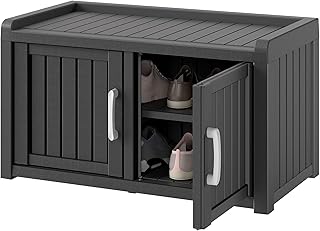


A luxury shoe organizer should do more than keep footwear off the floor. The right storage system can protect delicate materials, make a wardrobe easier to navigate, use available space efficiently, and complement the appearance of a well-designed bedroom, dressing room, walk-in closet, or entryway. For Canadian shoppers, the best choice also depends on room dimensions, seasonal footwear, household habits, construction quality, ventilation, and how much storage capacity is actually required.
This buying guide focuses on the factors that matter when comparing premium shoe storage in 2026. Instead of treating appearance as the only measure of luxury, consider the complete storage system: materials, dimensions, door design, accessibility, stability, ventilation, adjustability, cleaning requirements, capacity, and compatibility with the footwear you own.
The term luxury can describe very different products. A visually attractive organizer is not necessarily a well-engineered one, while an expensive-looking cabinet may be inconvenient if shelves are too shallow for boots or difficult to adjust for different shoe sizes.
For a premium shoe organizer, look for a combination of refined appearance and practical construction. Smooth finishes, carefully designed hardware, balanced proportions, sturdy shelving, clean edges, and thoughtful interior organization can all contribute to a more sophisticated result. The best design should also make everyday use easier rather than simply adding decorative features.
There is no universally best format. A compact organizer for an apartment entrance has very different requirements from a built-in-style cabinet for a large walk-in closet. Understanding the major formats makes product comparison much easier.
Freestanding cabinets are among the most versatile choices for Canadian homes because they can generally be positioned wherever storage is needed without committing to a permanent installation. They can work in bedrooms, dressing areas, hallways, and entry spaces.
Closed-door designs are particularly useful when you want footwear visually concealed. They can create a cleaner appearance than open shelving, especially when a room contains many pairs. Before buying, measure both the available floor area and the door-opening clearance. A cabinet that fits the wall may still be awkward if nearby furniture prevents its doors from opening fully.
Open shelves offer excellent visibility and quick access. They are useful for collections that are regularly rotated because every pair can be identified without opening a cabinet.
The trade-off is exposure to dust and visual clutter. Open shelving can also make a collection appear less orderly when different footwear styles and colors are mixed together. If choosing this format for a luxury interior, consistent spacing and careful arrangement can make a significant difference.
Glass-front storage is particularly suited to collectors who want footwear displayed while still receiving some separation from the surrounding room. Clear fronts can make it easier to identify individual pairs while contributing to a showroom-inspired appearance.
Glass requires more frequent attention to fingerprints, dust, and smudges than an opaque cabinet. Also consider whether the shelves provide enough clearance for the tallest shoes in your collection.
Stackable systems can be useful when storage requirements may change over time. Instead of committing to one large cabinet, shoppers can create a modular arrangement based on the number of pairs they currently own.
Check how individual components connect or stack. Stability becomes increasingly important as the overall height increases. A modular system should not be treated as automatically safe simply because the individual units are lightweight.
Over-the-door organizers are primarily space-saving solutions. They can be useful when floor space is limited, particularly for smaller bedrooms, utility areas, or compact closets.
They generally prioritize capacity and accessibility over the furniture-like appearance associated with luxury storage. Before choosing one, verify that the door can support the intended load and that the organizer does not interfere with hinges, handles, trim, or normal door operation.
A storage bench combines seating with footwear organization and can be especially practical near an entrance. This format is valuable in Canadian households where footwear may be removed at the door throughout the year.
Look carefully at the distinction between decorative entryway furniture and purpose-built shoe storage. A bench may have attractive proportions but limited internal capacity. Consider whether it accommodates everyday shoes, boots, slippers, and seasonal footwear or only a small selection of pairs.
Accurate measurement is one of the easiest ways to avoid an unsuitable purchase. Do not measure only the wall width. A useful assessment includes the complete footprint, surrounding clearance, and the internal dimensions required by your footwear.
Measure the usable wall or floor width where the organizer will sit. If the space is between two walls or pieces of furniture, take measurements at more than one height because walls and surrounding surfaces are not always perfectly parallel.
Measure from the floor to the lowest obstruction. For tall storage, identify baseboards, trim, lighting, vents, shelves, sloping ceilings, and other features that could restrict placement.
Depth is particularly important in hallways and entryways. A cabinet that technically fits may extend far enough into a walkway to become inconvenient. Leave sufficient clearance for people to move comfortably around doors and drawers.
Do not assume every shoe can use the same shelf dimensions. High-top sneakers, hiking footwear, ankle boots, tall boots, dress shoes, heels, and oversized athletic shoes can require different amounts of vertical and horizontal space.
Material selection affects appearance, structural performance, maintenance, and longevity. There is no single material that is ideal for every application.
Solid wood can provide a substantial furniture-like appearance and works particularly well in traditional, transitional, and high-end interiors. Different wood species have distinct colors, grain patterns, hardness, and finishing characteristics.
When comparing wooden organizers, examine construction rather than relying only on the material label. Panel thickness, joinery, shelf support, finishing quality, and hardware can have a major effect on the finished product.
Engineered wood products can provide consistent panels and attractive finishes while supporting many furniture designs. They are widely used in contemporary storage because they can offer predictable dimensions and a range of surface treatments.
Pay attention to edge finishing and hardware attachment points. These details are especially relevant when shelves are repeatedly loaded and unloaded.
Metal organizers can be highly practical for utility-focused storage. Steel construction may provide a strong framework, while powder-coated finishes can offer a clean contemporary appearance.
Metal shelving can work well for athletic footwear, everyday shoes, and utility spaces. However, the visual character may be less furniture-like than wood or glass-front cabinetry depending on the design.
Transparent materials can turn shoe storage into a display system. They allow footwear to remain visible while creating a more curated appearance.
Consider cleaning requirements, scratch resistance, panel thickness, and the quality of the surrounding frame. Transparency can also reveal dust and organizational inconsistencies, so these systems reward regular maintenance.
Fabric organizers are lightweight and flexible. They can be useful for seasonal storage, closets, and situations where portability is more important than furniture-grade construction.
They generally provide a different aesthetic and structural experience from premium cabinets. When evaluating them, inspect compartment dimensions, seams, frame support, closures, and how well the organizer maintains its shape under load.
Adjustability is one of the most useful features for a mixed footwear collection. Fixed shelves may work perfectly for a collection consisting mostly of low-profile shoes, but they can waste vertical space when taller footwear is introduced.
Look for shelf systems that provide several useful height positions rather than adjustment that is technically available but too limited to make a practical difference.
Ventilation deserves attention whenever shoes are stored in enclosed furniture. Footwear can retain moisture after normal use, especially during wet weather or after outdoor activities.
Ventilation features may include open backs, ventilation slots, breathable materials, or spacing around individual compartments. Enclosed storage should not be considered a substitute for allowing damp footwear to dry appropriately before long-term storage.
Cabinet doors affect both appearance and everyday usability. Hinged doors need adequate clearance, while sliding doors require appropriate track space. Flip-down compartments can save floor clearance but may have different capacity limitations.
When comparing products, examine the hardware specification and the way the doors operate. A beautiful cabinet can become frustrating if the opening mechanism makes it difficult to reach shoes stored toward the back.
Drawers can be convenient for smaller footwear, accessories, shoe-care supplies, or less frequently used items. However, drawers generally require full extension clearance, so they should be assessed against the available room layout.
Tall furniture deserves particular attention to stability. Anti-tip hardware or wall anchoring provisions can be important safety features, especially in homes with children or pets.
Follow the manufacturer's installation instructions and confirm that the supplied hardware is appropriate for the wall construction. Never assume that a tall cabinet is stable simply because it feels heavy when empty.
Hardware contributes to both aesthetics and usability. Recessed pulls can create a minimalist appearance, while metal handles can provide a more traditional furniture character.
Inspect the hardware finish, mounting method, ergonomics, and alignment. Small details such as these often distinguish a genuinely well-considered piece from a product that simply imitates a luxury appearance.
Dress shoes often benefit from shelves that provide enough width and height to prevent unnecessary compression. If maintaining the shape of formal footwear is important, consider how the shoes will sit on the shelf and whether additional shoe trees or protective accessories will be used.
Sneaker collections can vary considerably in size and shape. High-top designs and bulky soles can require more vertical clearance than conventional low-profile footwear.
Collectors should pay particular attention to shelf height, depth, visibility, and ventilation. Transparent compartments may be appealing when display is an important part of the storage objective.
Boots are among the most difficult items to accommodate in compact shoe organizers. An organizer designed around standard shoe dimensions may have insufficient vertical clearance for ankle boots or tall boots.
Before buying, measure your tallest pair and determine whether boots can be stored upright. If a cabinet has adjustable shelves, confirm that the adjustment range creates genuinely useful boot space.
Running shoes, hiking shoes, work footwear, and outdoor boots may be exposed to dirt or moisture more frequently than indoor footwear. For these categories, ventilation and easy cleaning can be more important than decorative materials.
Canadian homes may need to accommodate significant changes in footwear throughout the year. Rather than designing storage around only the shoes currently being worn, consider where summer footwear, winter boots, slippers, and less frequently used pairs will go during seasonal transitions.
The right organizer depends heavily on the type of Canadian home and the room in which it will be used. Apartments and condominiums may prioritize compact footprints, while larger homes may allow dedicated dressing rooms or walk-in closets.
Entryway storage deserves special consideration because outdoor footwear can introduce moisture, dirt, and debris. A practical arrangement can separate frequently used footwear from cleaner indoor or formal shoes.
For bedrooms and dressing rooms, appearance may carry more weight. In these spaces, a cabinet that matches existing furniture can feel more integrated than a purely utilitarian shoe rack.
For garages, mudrooms, or utility areas, durability, cleaning, ventilation, and capacity may be more important than decorative detailing.
Even a premium organizer can become inefficient if the interior is poorly arranged. Organization should make frequently used footwear easy to reach while reserving less accessible areas for occasional-use pairs.
Closed storage is usually preferable when the primary goal is a visually clean room. Doors hide mixed footwear styles and reduce direct exposure to household dust.
Open display is better when visibility and rapid access are priorities. It can also turn an organized footwear collection into part of the room's design.
Glass-front storage sits between these approaches. It provides a display effect while creating a defined boundary between footwear and the surrounding space.
There is no universal winner. The best format depends on whether your priority is concealment, display, accessibility, dust management, space efficiency, or interior design.
Look for simple silhouettes, restrained hardware, smooth finishes, and consistent proportions. A clean cabinet can integrate more naturally into a minimalist bedroom or dressing room than heavily decorative furniture.
Wood finishes, framed doors, classic hardware, and furniture-style proportions can work well in traditional spaces. Matching the organizer's finish to existing furniture can help create a coordinated room.
Contemporary spaces can accommodate glass, metal, high-contrast finishes, and geometric designs. The key consideration is visual balance: an organizer should complement the room rather than become an unnecessarily dominant element.
Walk-in closets provide more flexibility for dedicated shoe displays. Modular shelving, transparent compartments, integrated lighting, and carefully spaced shelves can create a boutique-inspired arrangement.
For a built-in appearance, compare the organizer's proportions with adjacent wardrobes and shelving. Even standalone furniture can look integrated when its dimensions and finish are coordinated with the surrounding space.
A stated capacity does not necessarily reflect the number of pairs that will fit comfortably in your particular collection. Large boots, high-top shoes, and unusually wide footwear can reduce usable capacity.
Exterior dimensions tell you whether the organizer fits the room, but interior measurements determine whether it actually stores your shoes effectively. Always compare shelf width, depth, and vertical clearance.
More storage is not automatically better. An oversized cabinet can dominate a small room, reduce walking space, and encourage accumulation of footwear that is rarely used.
A polished finish can attract attention, but construction quality determines how the organizer performs over time. Examine shelf support, frame rigidity, hinges, hardware, and assembly requirements before making a decision.
A cabinet may fit against a wall while still being impractical because a door collides with another piece of furniture. Map the complete opening path before buying.
Tall or narrow organizers should be evaluated for stability and appropriate anchoring. Follow installation instructions carefully, particularly when the furniture is placed in a household where children or pets are present.
Putting wet footwear directly into enclosed storage can create an unsuitable storage environment. Allow footwear to dry appropriately before placing it into long-term enclosed storage.
A storage system that works for summer shoes may become overcrowded when winter footwear is introduced. Consider the entire annual footwear collection rather than only the current season.
When comparing several products, avoid making the decision based solely on overall appearance or customer ratings. Create a consistent checklist so that each organizer is judged against the same requirements.
Brand recognition can be useful as a starting point, but it should not replace specification-level comparison. Depending on the type of storage required, shoppers may encounter names such as IKEA, SONGMICS, VASAGLE, Whitmor, HOMCOM, Seville Classics, and ClosetMaid while researching shoe organization and storage furniture.
For premium-looking interiors, compare the actual construction, dimensions, materials, hardware, and design rather than assuming that a familiar brand automatically provides the best solution. Brand reputation can help narrow the field, but the right organizer is the one that matches your specific storage requirements.
Customer reviews can provide useful information about assembly, dimensions, stability, finish quality, and everyday usability. However, individual experiences should be interpreted in context.
Look for recurring themes across multiple reviews rather than focusing on a single enthusiastic or negative comment. Reviews that mention specific dimensions, assembly steps, material quality, shelf strength, door operation, or long-term use can be more informative than comments that simply describe a product as good or bad.
A sensible budget should account for more than the purchase price. A lower-priced organizer may require additional storage accessories, replacement components, or a second unit if its practical capacity is lower than expected.
At the other end of the range, paying more does not automatically guarantee superior storage. A premium price should be evaluated against tangible differences such as materials, hardware, adjustability, construction, finish, capacity, and design.
When comparing products, calculate the cost relative to the storage you actually receive. A compact organizer with highly usable compartments may provide more practical value than a larger but inefficient design.
Proper maintenance helps preserve both the furniture and the footwear stored inside it. Cleaning requirements vary according to material and finish, so always follow the manufacturer's care instructions for the specific product.
Winter footwear creates a different storage challenge from lightweight everyday shoes. Boots can be heavier, taller, and more likely to carry moisture, salt, dirt, or snow from outdoor use.
A practical winter storage area should provide enough clearance for boots and should be easy to clean. If the organizer is positioned near an entrance, consider whether its materials and finish can tolerate the conditions of the space.
For long-term storage after winter, footwear should be appropriately cleaned and dried before being placed into enclosed compartments. Seasonal organization also provides an opportunity to inspect footwear before storing it and identify pairs that need cleaning, repair, or replacement.
Limited floor area does not necessarily require sacrificing organization. Vertical storage can make better use of available wall space, while narrow cabinets may work in areas where conventional furniture would be too deep.
Custom storage can be worth considering when a room has unusual dimensions, a large footwear collection, or a strong requirement for coordinated cabinetry. Built-in systems can use awkward corners and vertical space more efficiently than standard furniture.
The downside is reduced flexibility. A freestanding organizer can generally be moved or replaced more easily if your needs change. Custom cabinetry therefore makes the most sense when the room layout and storage requirements are relatively stable.
Premium storage often includes decorative or convenience features that sound attractive but may not improve the core storage function. Evaluate each feature according to how you will actually use the organizer.
Before choosing a luxury shoe organizer, verify the complete product specification rather than relying on photographs alone. Product images can make furniture appear smaller, larger, darker, lighter, or more spacious than it is in a real room.
The best organizer is ultimately the one that solves the specific storage problem without creating a new one. Start with the room, not the product. Measure the available space, identify the footwear categories you need to store, and decide whether concealment or display is more important.
Next, establish your minimum requirements. For example, a buyer with several pairs of boots may need adjustable shelving and generous vertical clearance, while a sneaker collector may prioritize visibility, compartment dimensions, and presentation. Someone furnishing a compact apartment may place greater importance on footprint and vertical storage.
Once those requirements are established, compare construction, materials, hardware, ventilation, stability, maintenance, and long-term flexibility. Only then should appearance and decorative details become the deciding factors between otherwise suitable options.
There is no single best option for every Canadian household. The right choice depends on available space, footwear types, storage capacity, preferred appearance, budget, and whether you want open display or enclosed storage. A well-matched organizer with suitable dimensions and construction is generally a better choice than a larger or more expensive product that does not fit your needs.
They can be worthwhile when the additional cost corresponds to meaningful improvements in construction, materials, hardware, adjustability, appearance, or long-term usability. A higher price alone does not establish better quality, so compare tangible specifications before paying a premium.
Solid wood can provide a classic furniture appearance, engineered wood offers a wide range of practical finishes and configurations, metal can provide durable contemporary construction, and glass or acrylic can be useful for display-oriented storage. The best material depends on the environment, design preference, maintenance expectations, and footwear collection.
Closed cabinets can create a cleaner visual appearance and reduce direct exposure to dust. However, adequate ventilation and proper footwear drying are important considerations. Damp footwear should be allowed to dry appropriately before being placed in enclosed long-term storage.
They can be an excellent option when display and visibility are priorities. They make it easier to see the collection while providing a more finished appearance than completely open shelving. The trade-offs include cleaning requirements and the need to keep the display organized.
There is no universal measurement because shoe dimensions vary. The goal is to provide enough clearance to retrieve each pair without forcing footwear against neighboring shoes or the shelf above. Adjustable shelving can make it easier to optimize the available space.
Look for storage with sufficient vertical clearance, appropriate shelf depth, and a structure capable of supporting heavier footwear. Adjustable shelves are particularly useful because they allow the interior to be configured around the tallest boots in the collection.
An open rack is generally better for visibility and rapid access, while a cabinet is better for creating a concealed, visually tidy appearance. Your room layout, cleaning preferences, footwear collection, and interior design goals should determine the choice.
Cleaning methods depend on the organizer's material and finish. Dusting and gentle cleaning are common approaches, but always follow the manufacturer's care instructions. Avoid harsh or abrasive products unless they are specifically approved for the surface.
There is no fixed schedule. Reorganizing at seasonal transitions can be practical in Canada because the footwear in regular use can change significantly throughout the year. A periodic review also helps identify footwear that needs cleaning, repair, replacement, or relocation.
A luxury shoe organizer should be judged as a piece of functional furniture, not simply as a container for footwear. The most successful choice combines suitable dimensions, reliable construction, useful capacity, sensible accessibility, appropriate ventilation, and a finish that complements the room.
For Canadian buyers, seasonal footwear deserves particular attention. Boots, wet-weather shoes, athletic footwear, formal shoes, and everyday sneakers can place very different demands on storage. A system designed around the actual collection will generally perform better than one selected solely for its advertised capacity or appearance.
Before making a purchase, compare several options using the same criteria: external dimensions, internal compartment sizes, materials, shelf adjustability, ventilation, stability, maintenance, assembly requirements, and overall design compatibility. Then review current specifications and customer feedback from trusted retailers. Taking this approach makes it easier to identify a shoe organizer that looks luxurious while also delivering the practical storage performance expected from a premium piece of furniture.